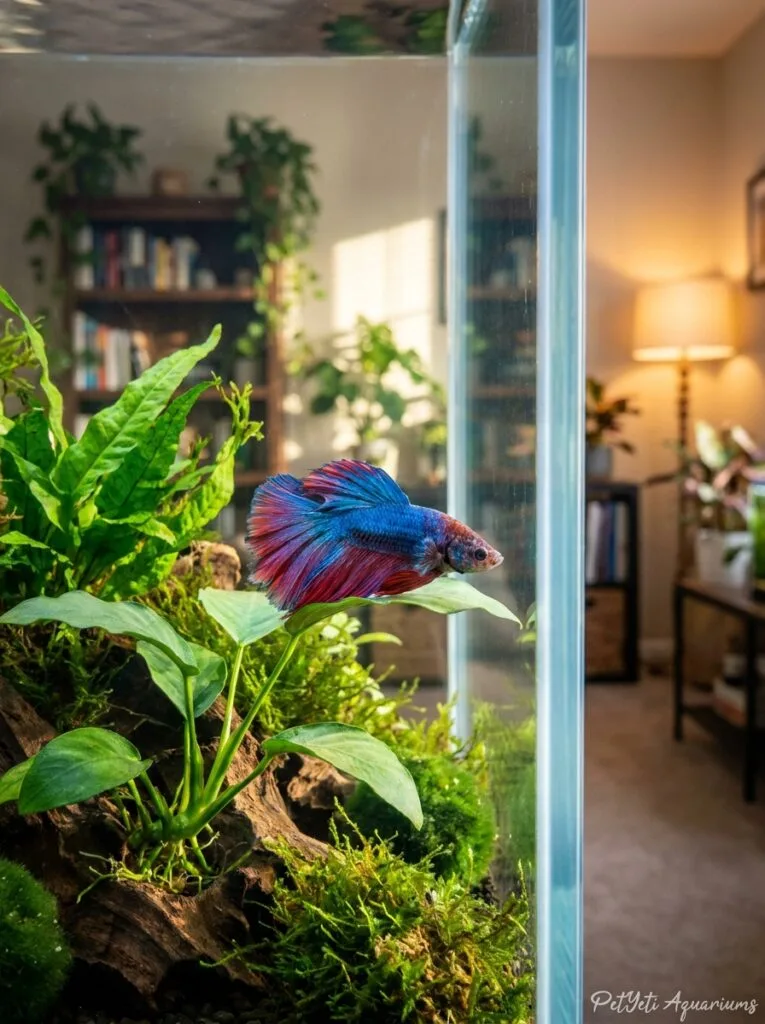
Why is my betta laying on its side? Before you assume something is seriously wrong, look at what your betta is doing when it rests and how it behaves when it swims.—whether slouched against a plant leaf, tucked into a corner, or resting flat on the gravel—it can instantly make your heart sink. The good news is that before you assume the worst, bettas are infamous for resting in bizarre, gravity-defying positions.
The key is figuring out whether your fish is simply taking a heavy nap or showing early signs of a water quality issue or swim bladder trouble.
PetYeti 10-Second Quick Diagnostic
If you are trying to figure out why is my betta laying on its side, check these quick signs first
It’s a WARNING SIGN if: Your betta struggles or tilts uncontrollably when trying to swim, looks bloated or pale, gasps at the surface, or ignores food completely.
It’s likely NORMAL if: Your betta rests sideways on a leaf or substrate, but pops up upright when you walk by, swims smoothly to eat, and keeps its bright natural colors.
- What to Check First (Your 2-Minute Diagnostic Checklist)
- 7 Reasons Your Betta Is Laying on Its Side
- 1. Normal Sleeping & Resting Quirks
- 2. Cold Water Temperature (Lethargy)
- 3. Swim Bladder Disorder (SBD) & Bloating
- 4. High Ammonia or Nitrite Levels
- 5. Excessive Filter Current
- 6. Old Age & Physical Exhaustion
- 7. Advanced Bacterial or Parasitic Infection
- When Should You Be Concerned?
- CONCLUSION
- FAQs
What to Check First (Your 2-Minute Diagnostic Checklist)
Before making any big changes to your tank or rushing out to buy fish medications, grab a cup of coffee and work through these five basic checks:
Breathing Rate & Color Intensity A sleeping betta breathes steadily and retains its rich color. Rapid gill movement, pale stress stripes, or clamped fins signal environmental stress or illness.
Water Temperature (Ideal: 78°F–80°F / 25°C–27°C) Bettas are tropical fish. If your water temperature drops below 75°F (24°C), their metabolism slows down dramatically. A cold betta becomes sluggish, lethargic, and will often drop to the bottom and rest on its side just to conserve energy.
Water Parameters (Ammonia, Nitrite, Nitrate) Toxic ammonia spikes from unconsumed food or waste can burn a betta’s gills and organs, causing them to rest sideways at the surface or bottom while gasping for air.
Belly Shape & Appetite Take a look at your betta from above. Is its belly rounded, swollen, or pineconing (scales sticking out)? Overfeeding and constipation are the #1 mechanical causes of swim bladder trouble.
Current Strength & Flow Long-finned varieties like Halfmoons, Rosetails, and Dumbos carry massive, heavy finnage. If your filter current is pushing them around, they will quickly tire out and flop sideways on a leaf or substrate to take a break.
As an Amazon Associate, PetYeti earns from qualifying purchases. This comes at no additional cost to you and helps support the site. We only recommend products we genuinely believe can help create healthier and more enjoyable aquariums.
PetYeti Calm Tip
Never perform a 100% water change when you see your betta laying down. Dumping your fish into brand-new, uncycled water shocks their immune system and makes the situation much worse. Stick to a gentle 20–25% water change with conditioned, temperature-matched water.
7 Reasons Your Betta Is Laying on Its Side
1. Normal Sleeping & Resting Quirks
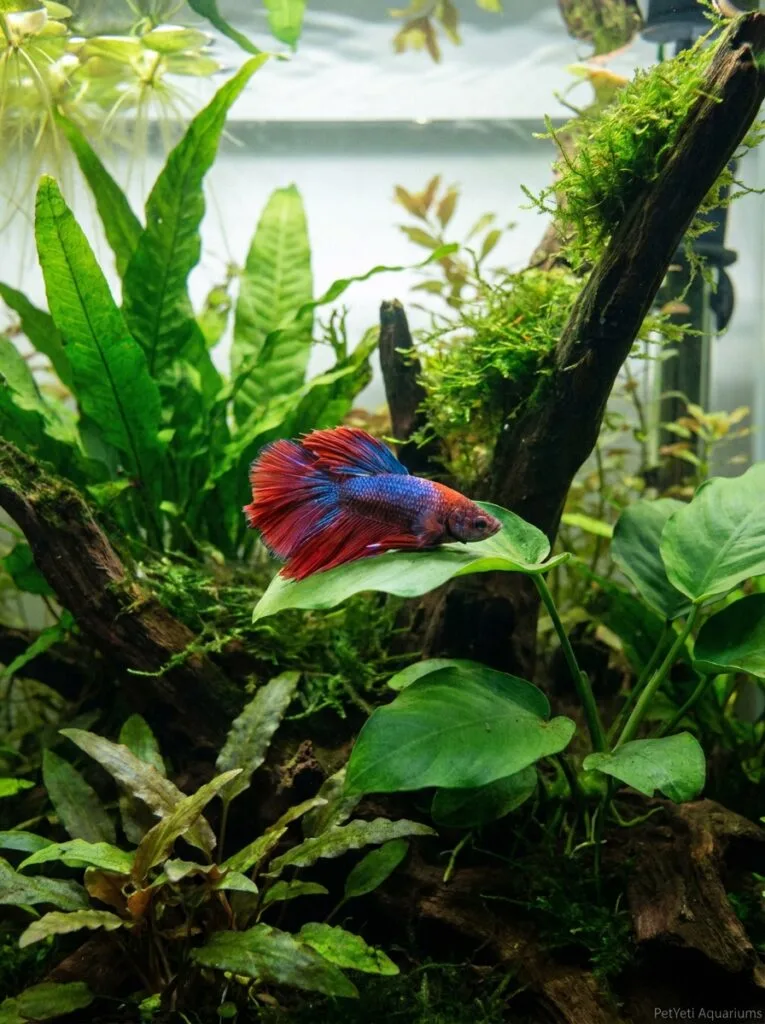
Bettas are curious, lazy creatures with distinct personalities. Because their flowing fins act like heavy gowns, they often look for cozy places to rest their weight. It is completely normal for a healthy betta to lay sideways on gravel, wedge itself behind a filter intake, or drape over a wide plant leaf.
The Fix: Provide broad-leaf live or silk plants (like Anubias) or a floating resting spot so your betta doesn’t have to swim far for air.
How to Tell: Your betta wakes up instantly when you approach the glass, brightens up at feeding time, and swims with perfect balance.
Real-Life Example
Many Betta owners become worried late at night when they find their fish lying sideways on a plant leaf, only to see it swimming normally the next morning.
If your Betta quickly returns to normal activity, sleep may be the explanation.
2. Cold Water Temperature (Lethargy)
As tropical fish, bettas need stable water temperatures between 78°F and 80°F. In unheated tanks or rooms with heavy AC, water temperature drops quickly. Cold water slows down a betta’s metabolism, making them sluggish, immune-compromised, and prone to resting on the bottom.
PetYeti Pick: The Orreco Preset Glass Heater or hygger Small Aquarium Betta Heater keeps small 5-to-10 gallon tanks at a rock-solid, safe temperature.
How to Tell: The tank temperature reads below 75°F (24°C), and your betta feels cool to the touch or stops eating.
The Fix: Install a reliable, preset or adjustable submersible glass heater to maintain a steady 78°F.
Real-Life Example
A Betta may spend part of the afternoon leaning sideways against a cluster of Java Fern leaves and then spend the evening swimming normally throughout the tank.
Context matters more than the position itself.
3. Swim Bladder Disorder (SBD) & Bloating
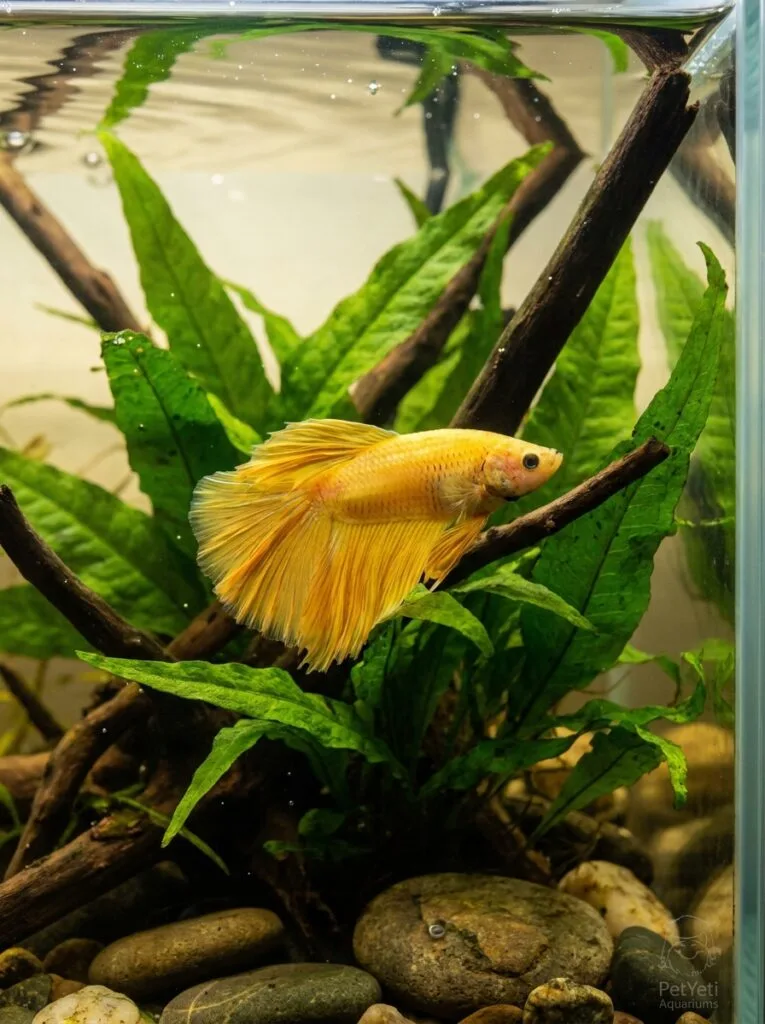
The swim bladder is a internal, gas-filled organ that helps your fish float effortlessly. When a betta becomes constipated or swallows dry air while eating floating pellets, its swollen stomach presses against the swim bladder, causing the fish to float sideways like a cork or sink helplessly to the bottom.
The Fix: Fast your betta (no food) for 2 to 3 days to let its digestive tract clear out. If bloating persists, offer a tiny piece of cooked, deseeded green pea or high-fiber daphnia, and add a mild Epsom salt bath (1 tsp per gallon of clean water in a temporary container for 10–15 minutes) to ease swelling.
How to Tell: The betta’s belly looks round or asymmetric, and it struggles to stay level when attempting to swim.
4. High Ammonia or Nitrite Levels
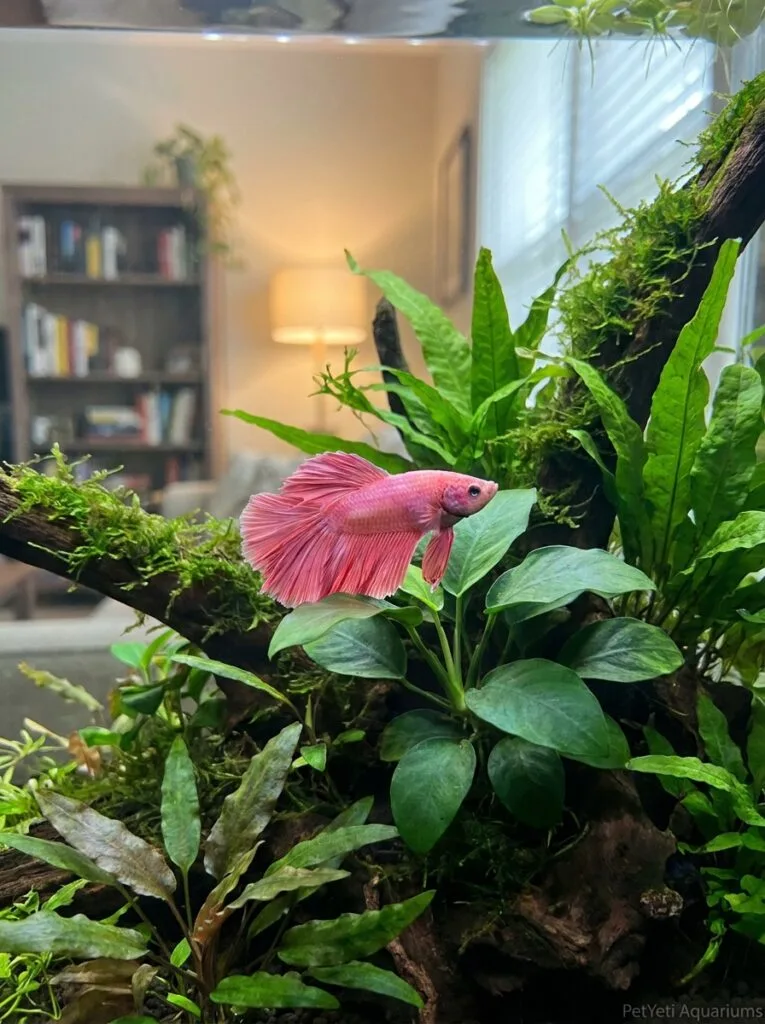
Unseen waste spikes are the #1 silent killer in beginner aquariums. High ammonia burns a betta’s delicate gills, reducing their ability to absorb oxygen. A poisoned fish will lay sideways near the surface where oxygen levels are highest, or slump on the bottom in exhaustion.
PetYeti Pick: Test your parameters instantly using the API Freshwater Master Test Kit—liquid test drops are far more accurate than paper test strips.
How to Tell: Your water looks cloudy, or testing reveals measurable ammonia/nitrite levels above 0 ppm.
The Fix: Perform an immediate 25–30% water change using fresh, temperature-matched water conditioned with Seachem Prime to detoxify residual ammonia.
Beginner Mistake to Avoid
When a betta is laying on its side, it is easy to panic and change too much at once. Avoid deep-cleaning the whole tank, replacing filter media, moving all decorations, adding random treatments, or doing a huge water change on the same day. First, check temperature and water quality, then make one calm adjustment at a time.
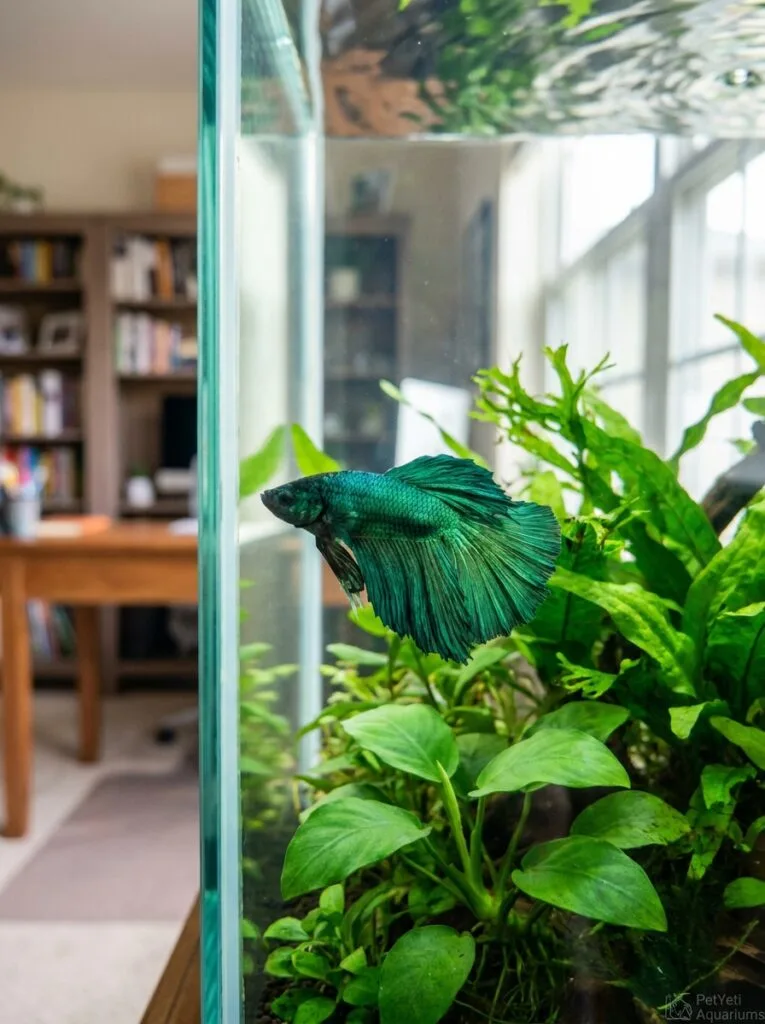
5. Excessive Filter Current
Long-finned betta breeds (like Halfmoons, Veiltails, and Crowntails) struggle against moderate water currents. Pushing through strong filter flow is like running a marathon in heavy winter coats—eventually, the fish collapses sideways onto a plant or substrate just to rest its muscles.
The Fix: Baffle your HOB filter spillway with a small piece of filter foam, or switch to a gentle, low-flow sponge filter powered by a silent mini air pump.
How to Tell: Your betta gets blown around when swimming past the filter outlet or actively hides behind decorations.
Aquaneat Aquarium Sponge Filter (+ Silent Air Pump)
Helpful Checks Before You Panic
When a betta is laying on its side, guessing can make things more stressful. A simple water test kit and aquarium thermometer help you check the two biggest beginner clues first: whether the water is safe and whether the tank is warm enough.
Helpful PetYeti guides:
• Best Aquarium Test Kits for Beginners
• How to Test Aquarium Water Correctly
• Best Aquarium Thermometers for Beginners
• Best Aquarium Heaters for Small Tanks
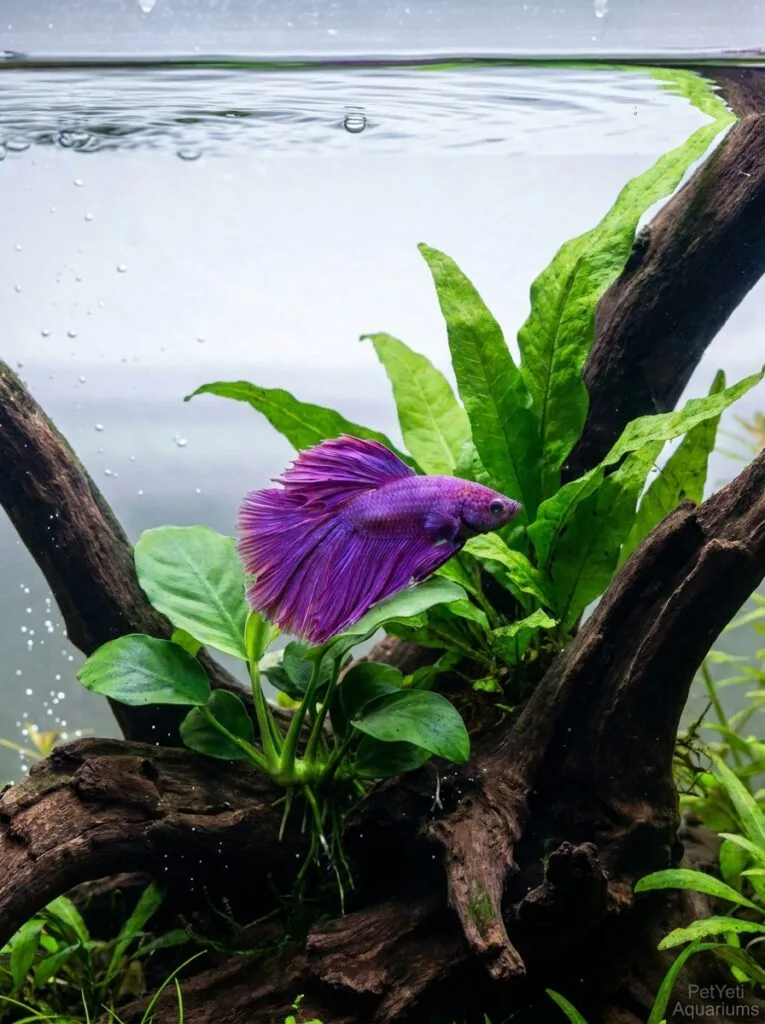
6. Old Age & Physical Exhaustion
Most pet store bettas are already 6 to 12 months old when you bring them home. A senior betta (2.5 to 3+ years old) naturally slows down, loses vibrancy, develops faded scales, and spends much more time resting on its side.
PetYeti Pick: A Aquarium Floating Betta Fish Skins or soft Betta Leaf Hammock gives tired seniors a cozy resting perch right near the surface.
How to Tell: Your fish is advanced in age, has clear eyesight, still eats happily when food is presented, but prefers long naps.
The Fix: Make life easy for your senior friend! Place shallow resting hammocks near the surface so it doesn’t have to push hard to reach atmospheric air.
Real-Life Example
A Betta that once explored every inch of the aquarium may eventually prefer short swimming sessions followed by long periods of comfortable rest among plants.
This can be a normal part of aging rather than a sign of illness.
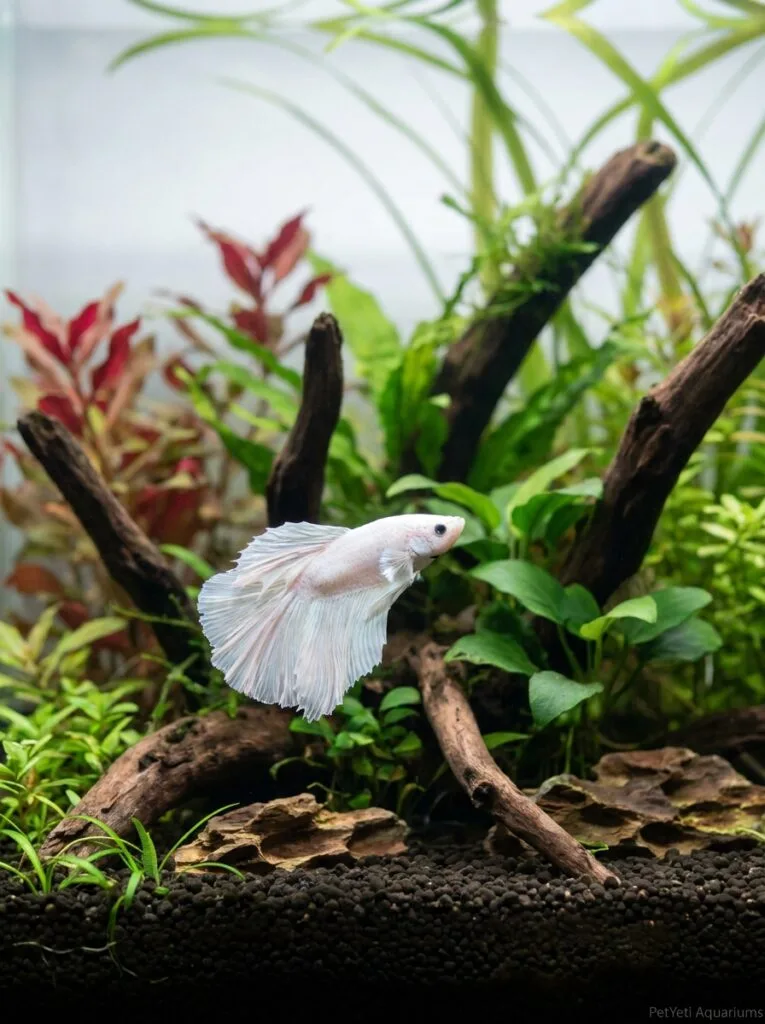
7. Advanced Bacterial or Parasitic Infection
If a betta lays flat on its side, shows pineconing scales (Dropsy), refuses food for days, or has severe velvet/fungal patches, it is dealing with a serious internal infection or end-stage organ failure.
The Fix: Move the fish to a quiet, shallow 2.5-gallon hospital tank with a gentle air stone, warm water (80°F), and treat with broad-spectrum antibacterials or antifungal medication under gentle quarantine conditions.
How to Tell: Lethargy is accompanied by physical symptoms like protruding eyes (Pop-eye), raised pinecone-like scales, or open sores.
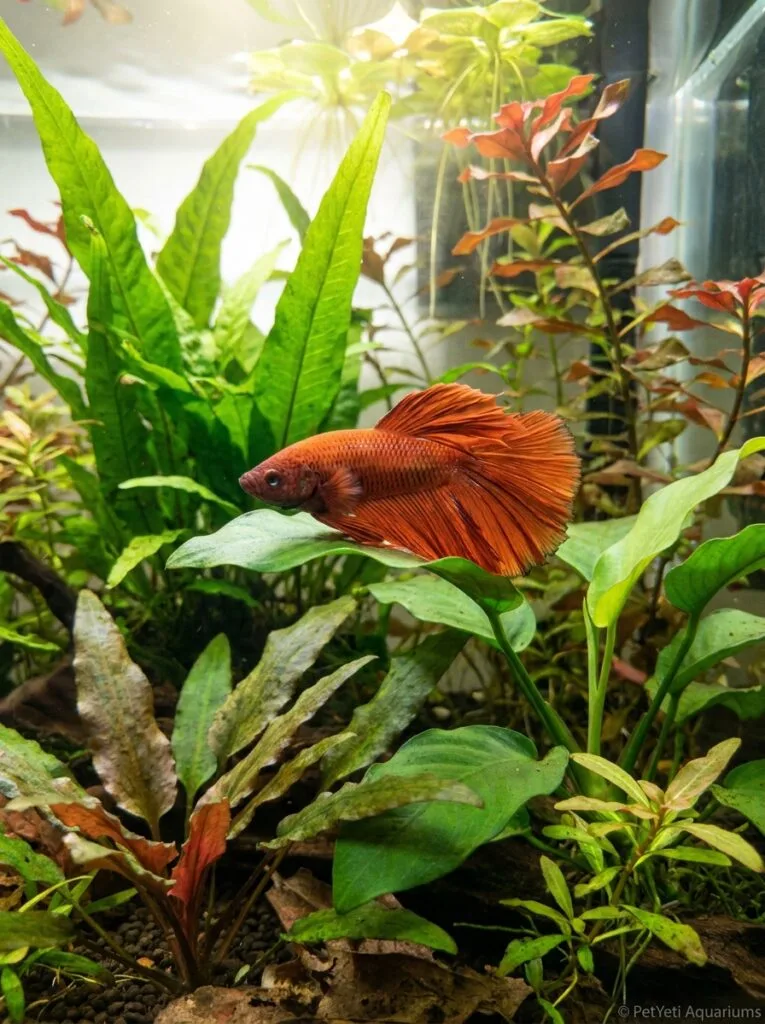
When Should You Be Concerned?
The position itself isn’t always the most important clue.
The surrounding symptoms tell a much clearer story.
You should pay closer attention if your Betta is laying on its side and also shows:
- Loss of appetite
- Difficulty swimming
- Rapid breathing
- Faded colors
- Clamped fins
- Severe lethargy
A healthy Betta that occasionally naps sideways on a leaf is usually behaving normally.
A Betta that remains on its side for extended periods while struggling to swim is a different situation.
Real-Life Example
A Betta resting sideways for thirty minutes and then eagerly swimming to the front glass at feeding time is typically not a cause for concern. A Betta that remains motionless all day and ignores food deserves closer observation.
The goal isn’t to panic.
The goal is to understand what normal looks like for your individual fish.
Related PetYeti Guides
If your betta is laying on its side, these guides can help you understand nearby behavior and reduce stress without making too many changes at once:
- Setting up a peaceful home for your fish? Check out our complete guide on building a How to Create a Stress-Free Betta Fish Tank
- Why Is My Betta Staying at the Bottom?
- Why Is My Betta Glass Surfing?
- How to Test Aquarium Water Correctly
- Want to keep your water parameters stable? Read our guide on how to fix cloudy water in a betta tank to prevent harmful ammonia spikes.
- Looking for silent, low-flow filtration? Compare top options in our quiet aquarium filters buyer’s guide.
CONCLUSION
Seeing your betta fish laying on its side can bring on instant panic, but in many cases, it’s simply a sign of a tired fish taking a goofy nap or dealing with a temporary, fixable issue like a cold tank or mild bloating. By staying calm, checking your water temperature and parameters, and giving your fish a quiet environment to recover, you can resolve most situations in a matter of days.
If you notice ongoing swim bladder issues, remember that fasting, gentle heat, and broad-leaf resting spots near the surface are your best allies. Take it step-by-step, make adjustments slowly, and give your betta the calm home it needs to bounce back.
PetYeti Quick Recap: Best Immediate Steps
If your betta is laying on its side, verify your tank temperature is 78°F–80°F, test your water for ammonia spikes, and fast your fish for 2–3 days if its belly looks swollen. To make recovery easier, add a Zoo Med Floating Betta Log or an adjustable hygger Small Aquarium Betta Heater to keep their environment warm, stable, and low-stress.
FAQs
Is it normal for a Betta fish to lay on its side?
Yes. Bettas often rest in unusual positions, including lying sideways on plant leaves or decorations.
Is my betta dying or just sleeping on its side?
A sleeping betta usually lays on its side on a leaf, gravel, or filter intake, but its gills will move slowly and steadily. When you tap gently on the glass or open the tank lid, a sleeping fish will perk up, straighten its fins, and look for food. If your betta is dying, it will typically show pale coloration, gasping or rapid breathing, clamped fins, and an inability to swim upright even when startled.
How do I know if my Betta is sleeping?
Sleeping Bettas usually remain motionless, react slowly, and return to normal behavior afterward.
Can stress make a Betta lay on its side?
Yes. Stress can increase resting behavior, especially after environmental changes.
Does poor water quality affect Betta behavior?
Absolutely. Water quality problems can lead to lethargy and changes in normal activity patterns.
What is swim bladder disease in Bettas?
Swim bladder problems affect balance and buoyancy, making it difficult for a fish to swim or remain upright.
Do older Bettas rest more often?
Yes. Many older Bettas naturally become less active and spend more time resting.
When should I worry about my Betta laying on its side?
You should investigate further if the behavior is accompanied by appetite loss, breathing issues, difficulty swimming, or other signs of illness.
Should I turn off the tank light if my betta is laying on its side?
Yes, turning off the aquarium lights for 24 to 48 hours is a great first step. Darkness reduces stress hormones, lowers activity levels, and allows an exhausted or bloated betta to rest quietly without feeling threatened by external room movements.
Can a betta recover from laying on its side?
Absolutely. If the issue is caused by mild constipation, a minor temperature drop, strong filter flow, or temporary fatigue, bettas usually recover within a few days once you correct their environment. However, if the underlying cause is advanced dropsy, organ failure, or severe bacterial infection, recovery becomes much harder.