
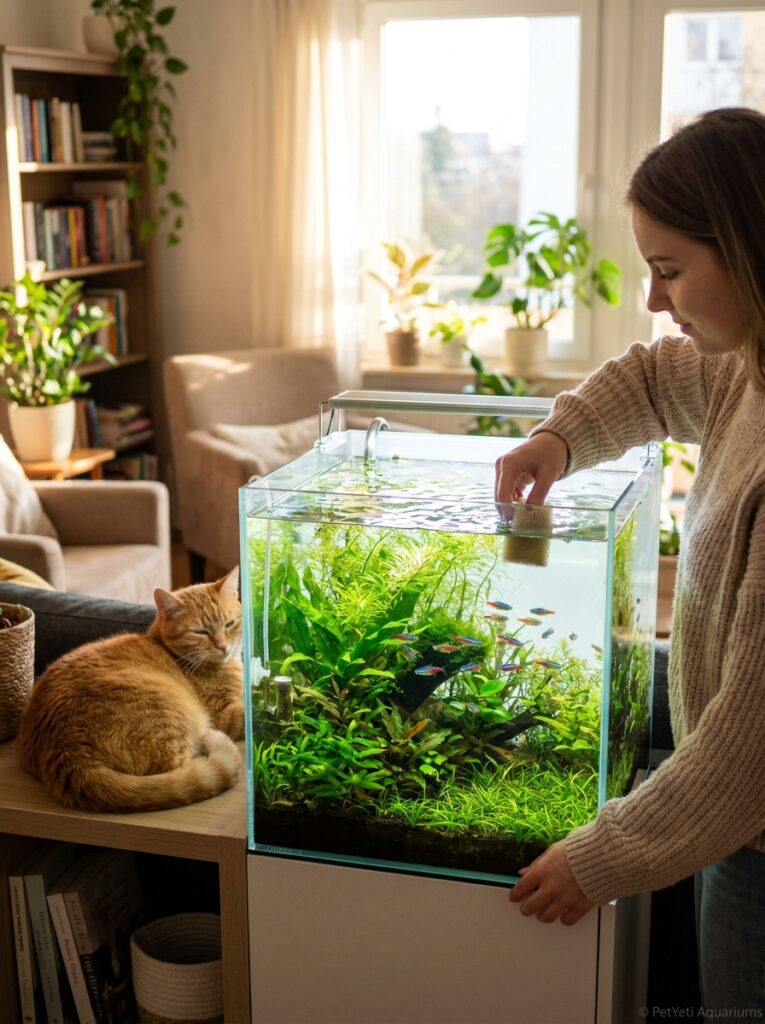
Best aquarium filters help beginners keep water cleaner, support beneficial biological filtration, and make routine aquarium care easier.
Choosing a filter can feel surprisingly complicated because the right option depends on more than tank size. Water flow, fish species, noise, maintenance, and the type of filtration you need all matter.
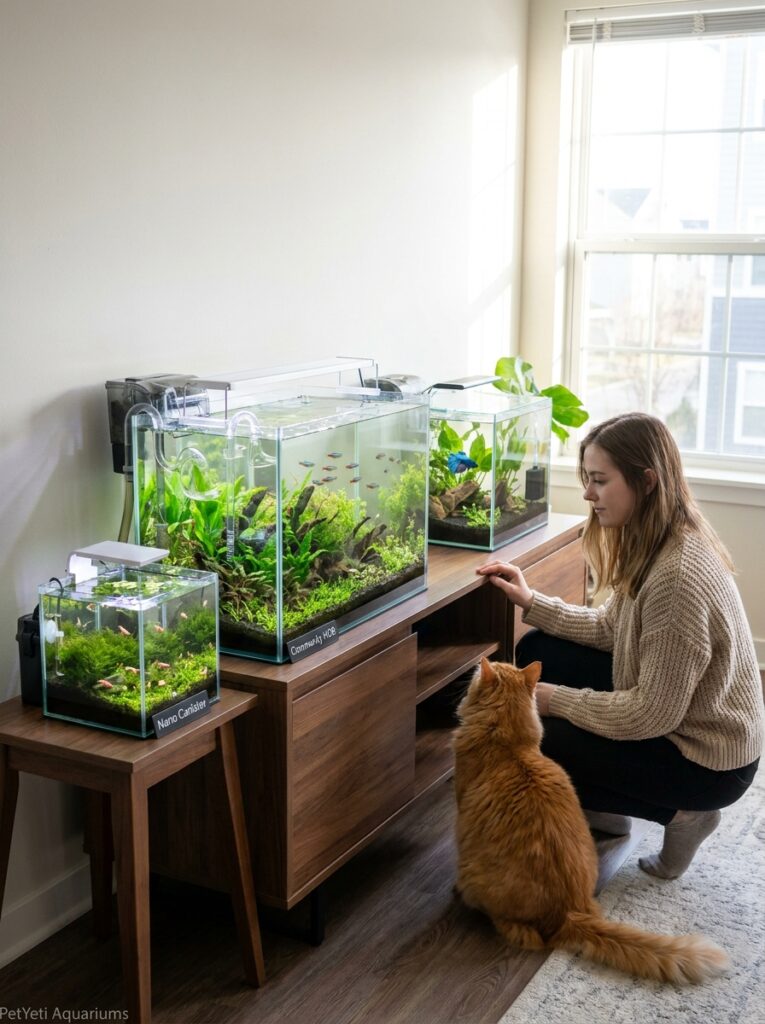
For example, a gentle sponge filter can be an excellent fit for a betta or shrimp tank, while a hang-on-back (HOB) filter may make more sense for a community aquarium where stronger mechanical filtration and convenient maintenance are priorities.
In this guide, we’ll explain what aquarium filters actually do, compare the most common filter types, and help you choose a filter that fits your aquarium without making maintenance feel like a second job.
Quick Answer
The best aquarium filter for most beginners is either a sponge filter or a hang-on-back filter, depending on the tank. Sponge filters are gentle, affordable, and great for bettas, shrimp, and nano tanks. Hang-on-back filters are better for many community aquariums because they provide stronger mechanical filtration and are easy to maintain.
WHAT TO CHECK FIRST
Before choosing an aquarium filter, check these basics:
- Water flow — avoid filters that push fish around the tank.
- Tank size — choose a filter rated for your aquarium volume.
- Fish type — bettas and shrimp usually need gentler flow.
- Noise level — important for bedrooms, desks, and apartments.
- Maintenance style — choose a filter you can clean easily.
- What Does an Aquarium Filter Actually Do?
- Why Beginners Shouldn't Choose a Filter Based Only on Price
- Different Types of Aquarium Filters Explained
- How to Choose the Right Filter for Your Aquarium
- Best Aquarium Filters for Beginners
- Common Filter Mistakes Beginners Make
- How to Maintain an Aquarium Filter Without Losing Beneficial Bacteria
- Which Filter Would We Choose?
- CONCLUSION
- FAQs
As an Amazon Associate, PetYeti earns from qualifying purchases. This comes at no additional cost to you and helps support the site.
Our recommendations are based on factors such as tank-size compatibility, water-flow characteristics, filtration type, manufacturer-listed features, ease of maintenance, and suitability for beginner aquarium setups.
We do not claim to have personally tested every product listed. Always check the manufacturer’s specifications to make sure a filter is appropriate for your aquarium.
If you are still planning the whole tank, start with our beginner aquarium setup checklist before choosing a filter.
What Does an Aquarium Filter Actually Do?
When people hear the word “filter,” they often imagine a machine that simply removes dirt from the water.
A good aquarium filter does much more than that.
It helps maintain water quality by performing three important jobs.
Mechanical Filtration
Mechanical filtration removes visible debris such as:
- Fish waste
- Uneaten food
- Plant debris
- Floating particles
This is what helps keep aquarium water looking clean and clear.
Biological Filtration
Biological filtration is the most important part of aquarium filtration.
Beneficial bacteria live inside the filter and help break down harmful waste produced by fish.
These bacteria convert toxic ammonia into safer compounds, helping create a stable environment for aquatic life.
Chemical Filtration
Some filters also use chemical media such as activated carbon.
This can help remove odors, discoloration, or certain impurities from the water.
For most beginners, mechanical and biological filtration are the primary priorities.
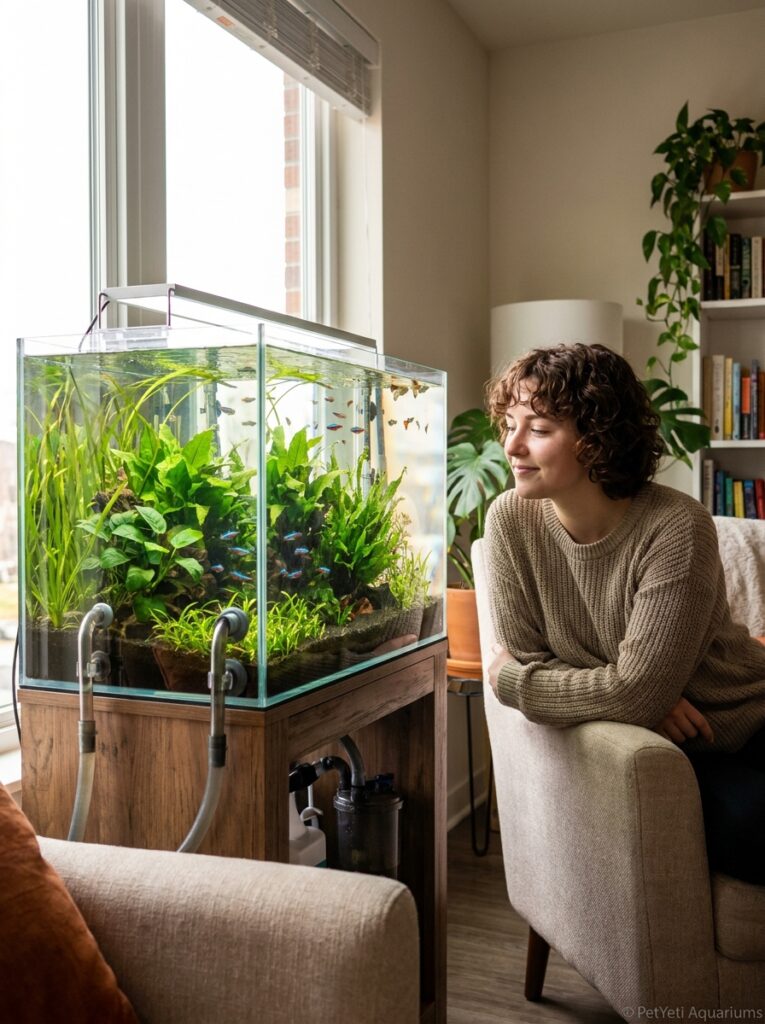
Why Beginners Shouldn’t Choose a Filter Based Only on Price
Price matters, but it shouldn’t be the first thing you use to choose an aquarium filter.
A lower-cost filter can be a perfectly good choice if it is correctly sized for your aquarium, provides suitable water flow, and is easy to maintain. A more expensive filter can still be a poor fit if it creates too much current or doesn’t suit the way you want to care for your tank.
When comparing filters, look at:
- Tank-size rating — make sure the filter is designed for your aquarium volume.
- Water flow — consider whether your fish need gentle or stronger circulation.
- Filter media — check what types of mechanical and biological filtration the filter supports.
- Maintenance — choose a design that is easy for you to clean and service.
- Noise — especially important for bedrooms, desks, and living spaces.
- Ongoing cost — consider replacement media and other maintenance costs.
The goal isn’t to buy the most expensive filter. It’s to choose one that you can run consistently, maintain correctly, and comfortably use with the fish you keep.
For many beginners, a simple filter that fits the aquarium well is a better choice than a more complicated model with features they don’t need.
Different Types of Aquarium Filters Explained
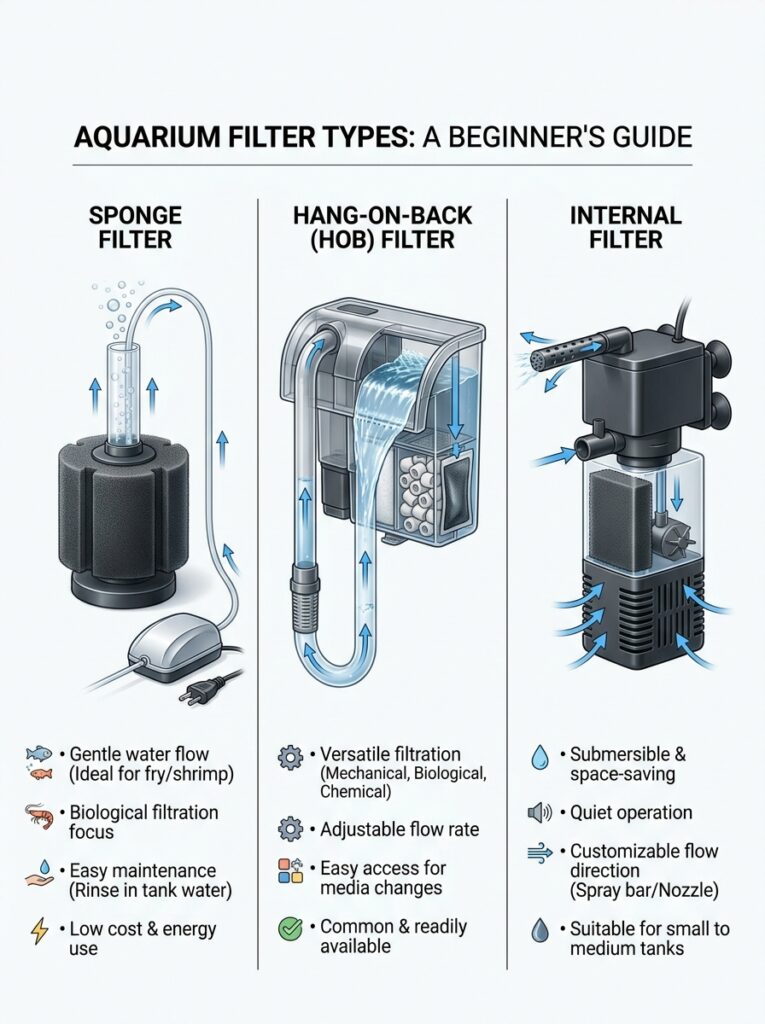
Before choosing a specific model, it’s helpful to understand the most common filter categories.
1. Sponge Filters
Sponge filters are among the most beginner-friendly options available.
They work by drawing water through a sponge that houses beneficial bacteria.
What We Like
- Affordable
- Gentle water flow
- Excellent biological filtration
- Ideal for bettas and shrimp
- Easy to maintain
What To Consider
- Less attractive visually
- Require an air pump
- Limited mechanical filtration
Real-Life Scenario
A sponge filter is often a great choice for someone creating a calm betta aquarium in a bedroom or small apartment.
⭐ PetYeti Pick: Beginner Sponge Filter
Recommended Option: AQUANEAT Sponge Filter
Best For:
✓ Betta tanks
✓ Shrimp tanks
✓ Nano aquariums
✓ Gentle-flow setups
Why We Like It:
✓ Gentle water movement
✓ Mechanical and biological filtration
✓ Simple design
✓ Easy to maintain
✓ Budget-friendly option
Sponge filters draw water through porous sponge material, providing mechanical filtration while also giving beneficial bacteria a place to grow. AQUANEAT’s sponge-filter range is designed for gentle, air-driven filtration and includes models for smaller aquariums.
PetYeti Take:
For a betta, shrimp, or other peaceful small aquarium where gentle water movement is important, a sponge filter is one of the simplest filter styles to consider.
Who Should Skip It:
Skip a sponge filter if you want stronger mechanical filtration, prefer not to use an air pump, or want a filter that sits outside the aquarium.
2. Hang-On-Back (HOB) Filters
Hang-on-back (HOB) filters attach to the rear of the aquarium and are a popular choice for beginner freshwater tanks.
They can provide both mechanical and biological filtration while keeping most of the equipment outside the aquarium, which makes the tank easier to access and maintain.
What We Like
- Easy access for routine maintenance
- Good mechanical filtration for many community aquariums
- Supports biological filtration through filter media
- Available in a wide range of tank sizes
- Many models offer adjustable or controllable flow
What To Consider
- Some models create stronger water movement than sensitive fish prefer
- Noise levels vary between models and setups
- Filter media and replacement costs should be considered
- The filter needs enough clearance behind the aquarium
Real-Life Scenario
For a beginner setting up a community aquarium in a living room or home office, a HOB filter can be a convenient choice when you want accessible maintenance and stronger filtration without placing the entire filter inside the tank.
⭐ PetYeti Pick: Beginner-Friendly HOB Filter
Recommended Option: AquaClear Power Filter
Best For:
✓ Beginner community aquariums
✓ Small to medium freshwater tanks
✓ Setups where adjustable water flow is useful
Why We Like It:
✓ Adjustable water flow
✓ Multiple filtration stages
✓ Easy access to filter media
✓ Straightforward maintenance
The AquaClear range is designed with separate mechanical, chemical, and biological filtration stages, and its adjustable flow control lets you reduce water movement when needed. Fluval also provides guidance for regular cleaning and media maintenance.
PetYeti Take:
For a beginner who wants a traditional HOB filter with adjustable flow and accessible filter media, the AquaClear is a practical option to consider.
Who Should Skip It:
AquaClear may not be the first choice for a small betta or shrimp aquarium where very gentle water movement is a priority. A sponge filter may be simpler for those setups.
Real-Life Example
If your aquarium sits beside a desk, bed, or in a living room, noise and water movement become part of your everyday experience.
That makes flow control and regular maintenance worth considering alongside filtration performance when choosing a beginner filter.
3. Internal Filters
Internal filters sit directly inside the aquarium and are often included with beginner aquarium kits.
They can be useful when you want a compact filter that is simple to install and doesn’t require equipment hanging on the back of the tank.
What We Like
- Compact design
- Simple installation
- No equipment hanging outside the aquarium
- Available for smaller aquarium setups
What To Consider
- Takes up some space inside the aquarium
- Can be less flexible than a HOB filter
- May be more noticeable in a carefully designed aquascape
- Flow should still be appropriate for the fish you keep
Real-Life Scenario
An internal filter can make sense for a smaller aquarium where simple installation and a compact setup matter more than having the flexibility of a larger HOB filtration system.
How to Choose the Right Filter for Your Aquarium
Instead of asking, “What is the best aquarium filter?”, ask:
What type of filtration fits my aquarium, my fish, and the way I want to maintain the tank?
Four things matter most.
1. Start With Your Tank Size
Choose a filter that is rated for your aquarium volume.
Tank size gives you the starting point, but don’t treat the manufacturer’s maximum tank rating as a guarantee that every setup will need the same amount of filtration. Stocking levels, fish species, and maintenance habits also matter.
2. Consider Your Fish
Different fish tolerate different levels of water movement.
- Betta or shrimp: gentle flow is usually preferable
- Peaceful community aquarium: a HOB filter can provide a useful balance of circulation and filtration
- Small or delicate setups: consider whether the filter’s flow can be reduced or diffused
If your fish are constantly being pushed around by the current, the filter may not be a good fit even if its tank-size rating looks correct.
3. Think About Noise and Where the Tank Sits
A filter beside your bed or computer is a very different experience from one in a utility room.
For bedrooms, desks, and living spaces, consider:
- Pump and motor noise
- Water splashing
- Vibration
- Whether the flow can be adjusted
A quieter setup can make routine aquarium care much more pleasant.
4. Choose a Maintenance Style You Will Actually Use
Look at how easy it is to access the filter, clean the media, and replace consumable parts.
A filter with a simple maintenance routine is often a better beginner choice than one with features you won’t use.
A Simple Starting Point
If you’re still unsure:
- Betta or shrimp tank → start by considering a sponge filter
- Community aquarium → consider a HOB filter
- Small aquarium with limited space → consider an internal or compact filter
- Bedroom or home-office aquarium → prioritize controllable flow and low noise
- First aquarium → choose the simplest filter you can comfortably maintain
The best filter is the one that matches your aquarium rather than simply having the highest flow rate or the most features.
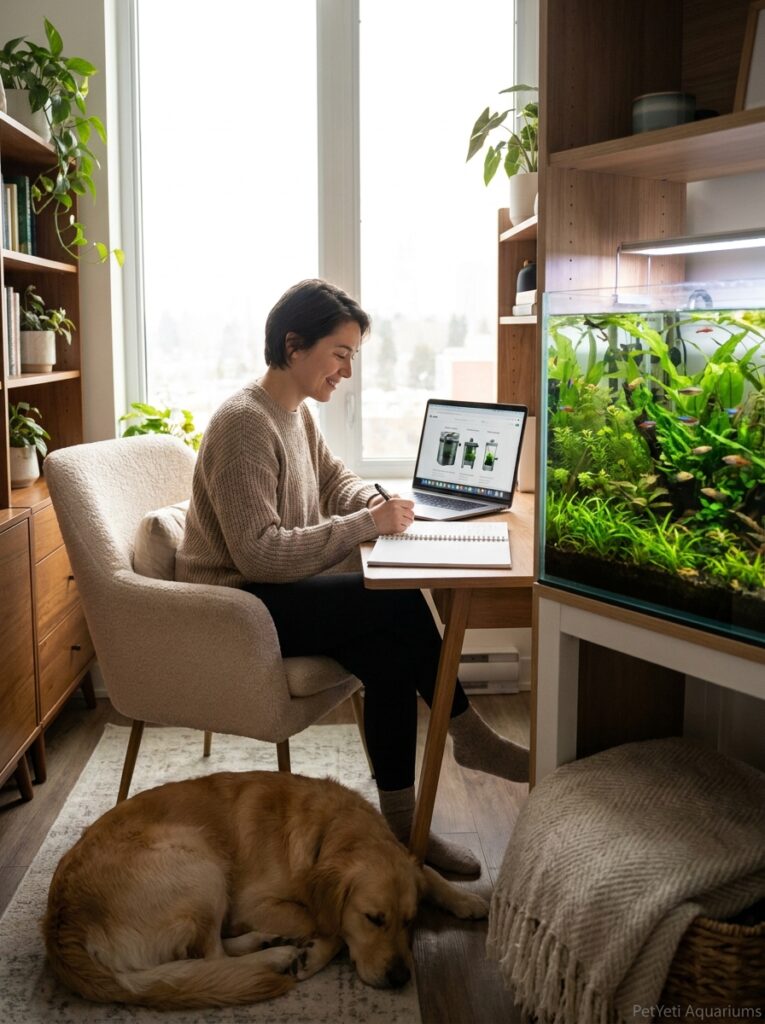
Best Aquarium Filters for Beginners
There isn’t one best aquarium filter for every beginner. The right choice depends on your tank size, fish, desired water flow, noise tolerance, and how you prefer to maintain the aquarium.
Rather than ranking every filter from “best” to “worst,” we prefer matching the filter style to the situation.
Quick Filter Guide
| Aquarium or Situation | Filter Style to Consider | Why |
|---|---|---|
| Betta tank | Sponge filter | Gentle flow and simple biological filtration |
| Shrimp tank | Sponge filter | Gentle water movement and easy maintenance |
| Community aquarium | HOB filter | Convenient maintenance and strong mechanical filtration |
| Bedroom aquarium | Quiet sponge or HOB | Noise becomes an important part of the setup |
| Home-office aquarium | Quiet, controllable HOB or sponge | Balances filtration with a comfortable workspace |
| Small aquarium | Sponge or compact internal filter | Simple filtration without taking up much space |
| First aquarium | Sponge or HOB | Both are straightforward options for beginners |
Best for Betta Tanks
A quality sponge filter is a strong starting point when gentle water movement is important.
Look for a setup that provides adequate filtration without pushing the fish continuously around the aquarium.
Best for Shrimp Tanks
Sponge filters are a popular choice for shrimp aquariums because they provide gentle water movement and give beneficial bacteria a place to grow.
Best for Community Aquariums
A HOB filter can be a practical choice for many community aquariums because it combines convenient maintenance with mechanical and biological filtration.
Choose the filter according to your aquarium’s size, stocking, and fish species. If your fish prefer gentler water movement, look for a model with adjustable flow or consider ways to diffuse the return flow.
If you’re comparing the two main beginner choices, see our guide to Sponge Filter vs HOB Filter for a more detailed comparison.
Choose the size and flow according to the aquarium and the fish you keep rather than simply choosing the largest model available.
Best for Bedrooms and Home Offices
When an aquarium sits beside a bed or workspace, noise deserves extra attention.
Look for a filter with manageable flow, minimal vibration, and a setup that doesn’t create unnecessary splashing. Our guide to quiet aquarium filters is useful if noise is one of your main concerns.
Best for Busy Beginners
If you don’t want aquarium maintenance to feel complicated, prioritize a filter that is easy to access and straightforward to clean.
Look for:
- Easy access to filter media
- Simple cleaning and maintenance
- Readily available replacement parts
- A flow rate that suits your fish
- A design you feel comfortable maintaining regularly
The best filter for a busy beginner isn’t necessarily the most powerful one. It’s the one that makes consistent maintenance easy.
Best for Bedrooms
⭐ PetYeti Pick: Quiet Bedroom Filter
Recommended Option: Aqueon QuietFlow LED PRO
Best For:
✓ Bedroom aquariums
✓ Desk setups
✓ Living spaces where filter noise matters
Why We Like It:
✓ Internal pump designed to dampen noise
✓ Self-priming pump that restarts after power interruptions
✓ LED cartridge-change indicator
✓ Multiple filtration stages
✓ Available in sizes for different aquarium volumes
Aqueon describes the QuietFlow LED PRO as a quiet-operation power filter with an internal pump designed to dampen noise. Its LED indicator also provides a visual reminder when the cartridge needs attention. The QuietFlow LED PRO 10 is rated for aquariums up to 20 gallons.
PetYeti Take:
For a bedroom or home-office aquarium, noise is part of the overall experience. A filter specifically designed with quieter operation can therefore be worth considering alongside its filtration features.
Who Should Skip It:
Skip this option if you specifically want highly adjustable flow or a more flexible reusable-media setup. A sponge filter or another HOB model may be a better fit depending on your priorities.
Common Filter Mistakes Beginners Make
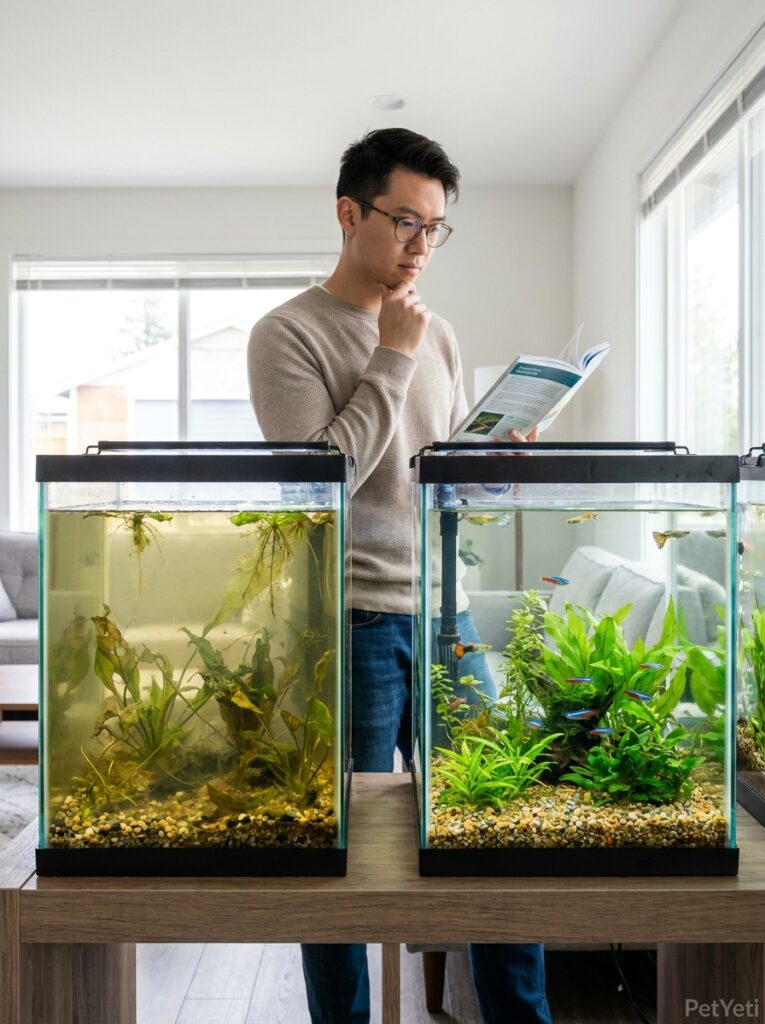
Many aquarium filtration problems aren’t caused by the filter itself. They’re caused by choosing the wrong size, creating too much flow, or maintaining the filter in a way that removes too much established biological media.
1. Replacing All Filter Media at Once
Replacing every piece of filter media at the same time can remove a large portion of the established biological media in the filter.
Unless the manufacturer specifically requires replacement, avoid changing everything at once. Follow the filter manufacturer’s instructions and replace or clean media according to its condition and purpose.
2. Choosing a Filter Without Considering Tank Size
A filter should be appropriate for your aquarium volume and stocking level.
Don’t choose a filter solely because it has the highest advertised flow rate. A filter that is too large or produces excessive flow may not be a good match for every aquarium.
3. Ignoring Filter Maintenance
Even a good filter needs routine attention.
Check the intake, impeller, tubing, and filter media regularly, and clean components according to the manufacturer’s recommendations.
If flow has noticeably decreased, don’t simply assume the filter has reached the end of its life. A clogged intake or dirty media may be the simpler explanation.
4. Creating Too Much Water Flow
More flow isn’t automatically better.
Some fish, including bettas, may struggle with strong currents. If fish are constantly being pushed around the aquarium or avoiding areas of strong flow, consider reducing or diffusing the water movement.
5. Turning the Filter Off for Long Periods
Aquarium filters are generally designed to operate continuously.
Turning filtration off for extended periods can interrupt water movement and reduce oxygen availability around the filter media. If you need to switch a filter off for maintenance, follow the manufacturer’s instructions and restart it as soon as appropriate.
How to Maintain an Aquarium Filter Without Losing Beneficial Bacteria
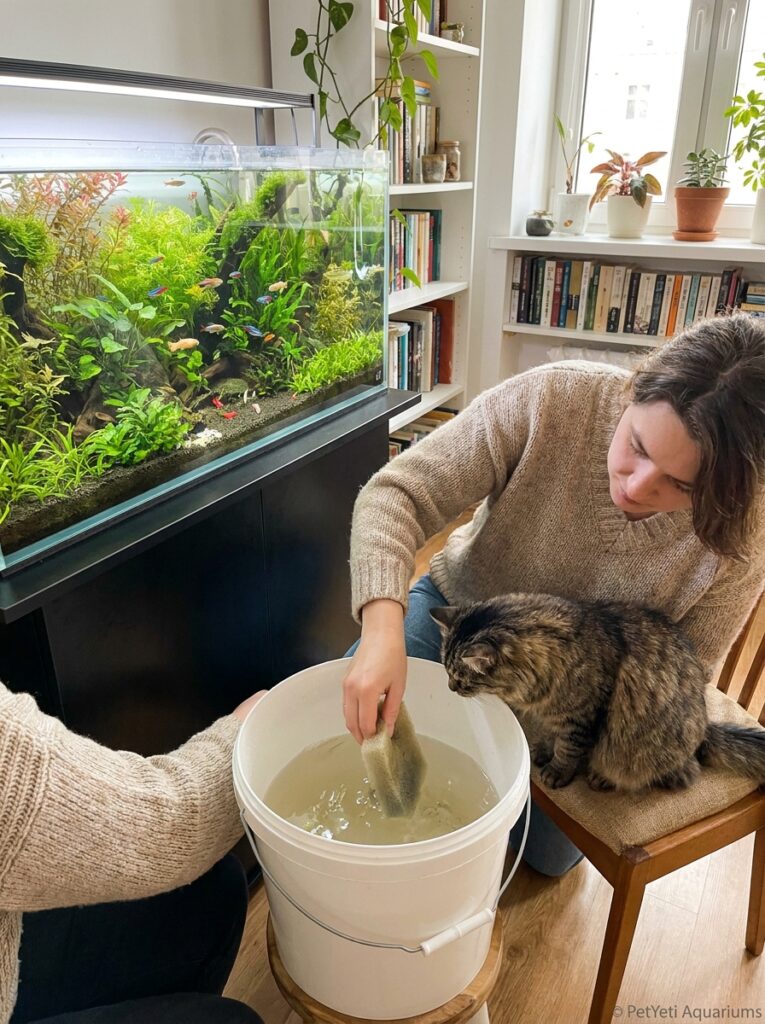
Regular filter maintenance helps keep water moving properly without unnecessarily disturbing the biological filtration established in the filter media.
Clean the Filter Media Carefully
When cleaning reusable filter media, use removed aquarium water rather than untreated tap water whenever appropriate for your filter and maintenance routine.
The goal is to remove accumulated debris without aggressively cleaning away all of the established biological material.
Don’t Replace Everything at Once
If your filter uses multiple media types, avoid replacing all of them simultaneously unless the manufacturer’s instructions specifically call for it.
Staggering replacement can help preserve established biological filtration.
Check the Mechanical Parts
If filter flow becomes weaker than usual, check:
- The intake
- Intake sponge or pre-filter
- Impeller
- Tubing
- Filter media
A buildup of debris can reduce flow and make a normally quiet filter work less effectively.
Follow the Manufacturer’s Instructions
Different filters use different media and components, so maintenance schedules aren’t identical.
Use the manufacturer’s instructions as the starting point for cleaning, replacing, and positioning filter media.
Keep Track of Your Aquarium Care
A simple maintenance record can make aquarium care easier to stay consistent with.
CalmTank is a free aquarium-care companion from PetYeti that lets you record water tests, observations, maintenance, tank changes, and reminders in one place.
Which Filter Would We Choose?
If we were helping a beginner choose a filter, we wouldn’t start with the most powerful or most expensive option.
We’d start with the aquarium and ask:
- What fish are you keeping?
- How much water movement do they prefer?
- How large is the aquarium?
- How important is low noise?
- How comfortable are you with routine maintenance?
For a betta or shrimp aquarium, we’d start by considering a sponge filter because gentle water movement and simple maintenance are often useful priorities.
For a community aquarium, we’d generally consider a HOB filter when convenient maintenance and stronger mechanical filtration are priorities.
For a bedroom or home-office aquarium, we’d give extra attention to noise, vibration, splashing, and flow control.
The best filter isn’t necessarily the one with the highest flow rate or the longest feature list.
It’s the filter that fits your aquarium and that you can maintain consistently.
Related PetYeti Guides
If you want to go deeper, these guides cover the next questions beginners commonly have:
- Comparing filter styles: Read our guide to Sponge Filter vs HOB Filter.
- Reducing aquarium noise: See our guide to Quiet Aquarium Filters.
- Choosing tank size: Read Choosing the Right Aquarium Size for Beginners.
- Setting up a betta aquarium: See Beautiful Betta Fish Tank Setup for Beginners.
- Starting the nitrogen cycle: Read How Long Does an Aquarium Take to Cycle?
These guides let you explore the specific decision you’re trying to make without turning this broad beginner guide into a collection of overlapping articles.
CONCLUSION
The best aquarium filter isn’t necessarily the most powerful or expensive option.
For beginners, the better approach is to match the filter to your tank size, fish, water-flow needs, noise tolerance, and maintenance routine.
A sponge filter can be a simple choice for bettas, shrimp, and other gentle-flow setups. A HOB filter can be a practical option for many community aquariums when convenient maintenance and stronger mechanical filtration are priorities.
Whichever style you choose, make sure it is appropriately sized, maintain it according to the manufacturer’s guidance, and pay attention to how your fish respond to the water movement.
The goal is simple: choose filtration that fits your aquarium and makes regular care easier.
FAQs
What is the best type of aquarium filter for beginners?
There isn’t one best type for every aquarium. Sponge filters and HOB filters are two practical starting points for many beginners, depending on the fish, tank size, desired water flow, and maintenance preferences.
Are sponge filters good for bettas?
Yes. Sponge filters can be a good choice for betta aquariums because they provide filtration with relatively gentle water movement.
How often should I clean my aquarium filter?
There isn’t one schedule that works for every filter.
Check the filter regularly and clean it when flow decreases or debris builds up. Follow the manufacturer’s maintenance instructions for the specific filter and media you use.
Can a filter be too powerful?
Yes. Excessive water movement can be unsuitable for some fish, including bettas.
If fish are constantly being pushed around, struggling to swim, or avoiding areas of strong current, consider reducing or diffusing the flow.
Should an aquarium filter run all the time?
Most aquarium filters are designed to operate continuously.
Keeping filtration running provides ongoing water movement and filtration. If you need to turn a filter off for cleaning or another specific reason, follow the manufacturer’s instructions and restart it when appropriate.
Can I turn my aquarium filter off at night?
Generally, there is no reason to turn a standard aquarium filter off simply because it is nighttime.
Continuous filtration helps maintain water movement and filtration. If noise is the concern, address the source of the noise or consider a quieter filter rather than routinely switching filtration off.
How do I know if my filter is too small?
Look at the manufacturer’s tank-size rating first, then consider your aquarium’s stocking and maintenance needs.
Poor flow, persistent debris, or water-quality problems can have many causes, so don’t assume an undersized filter is automatically responsible. Check the filter, media, water quality, and maintenance routine before replacing it.
Do planted aquariums still need filters?
Many planted aquariums still benefit from filtration.
Plants contribute to the aquarium ecosystem, but filtration can provide additional mechanical and biological filtration and help keep water circulating.