
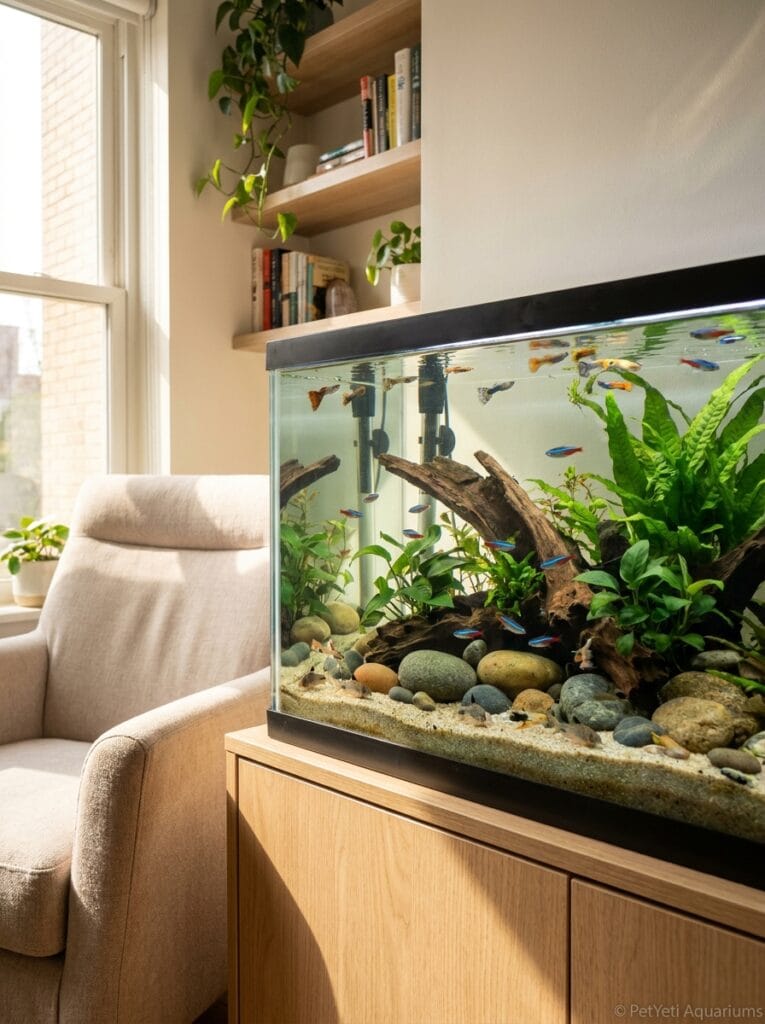
One of the easiest mistakes beginners make starts with a completely innocent thought:
“The tank still looks empty.”
If you’ve ever stared at your aquarium while standing in a fish store, you’re definitely not alone.
You set up a tank, add a few fish, and suddenly the aquarium feels like it needs more life.
A few extra fish probably won’t hurt…
Right?
The tricky part is that fish tanks don’t work like decorative shelves where you simply fill empty space.
Fish bring waste.
Fish consume oxygen.
Fish change your tank’s biological balance.
And sometimes an aquarium that looks empty is actually stocked perfectly.
In this guide we’ll look at how stocking really works, beginner-friendly guidelines, and how to avoid one of the most common reasons new aquariums run into trouble.
Quick Answer — How Many Fish Can You Put In An Aquarium?
There isn’t one universal number.
The answer depends on:
- Tank size
- Fish species
- Adult fish size
- Filtration
- Swimming behavior
- Aquarium maturity
For beginners, a safer approach is usually:
Start smaller than you think you need.
Adding fish later is easy.
Fixing an overcrowded aquarium usually isn’t.
Why Empty Space Can Fool Beginners
Many beginners accidentally judge stocking based on appearance.
The tank still looks open.
The fish seem tiny.
Everything appears fine.
Then a few months pass.
Real-Life Example
A beginner buys six tiny fish for a new aquarium.
The tank still looks spacious.
A few weeks later they add:
- Four more fish
- A couple bottom dwellers
- A few “just because they looked cool”
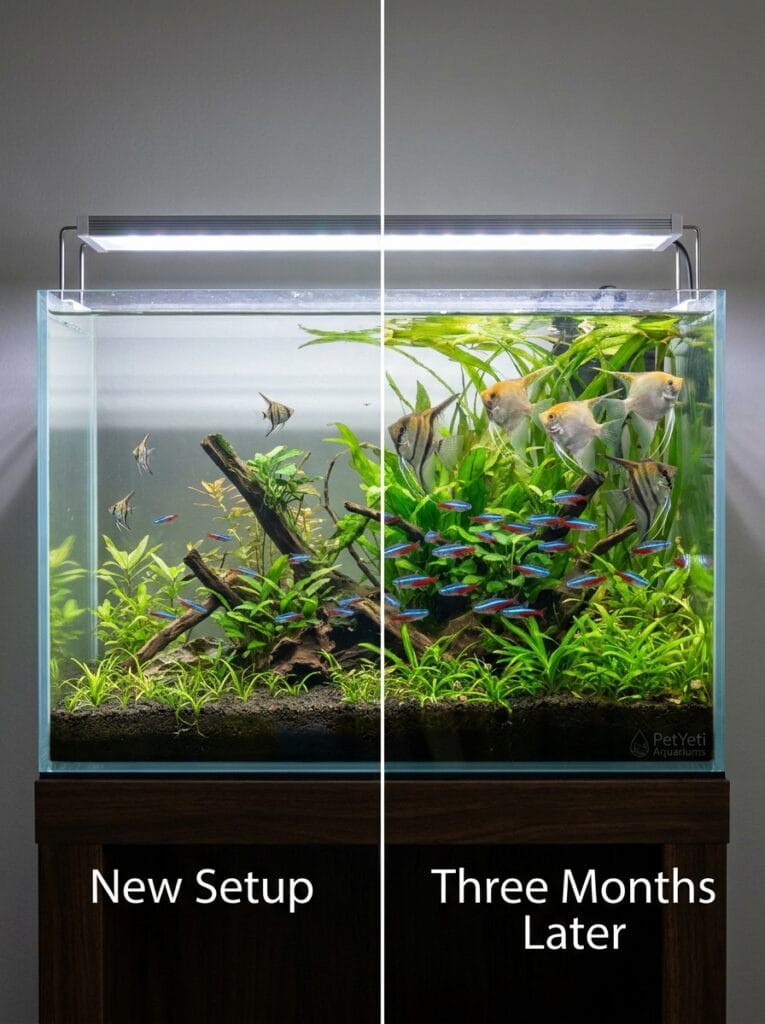
Three months later:
The original fish have grown.
Swimming space starts feeling tight.
Water changes become more frequent.
The filter seems dirtier than before.
The problem wasn’t the tank size itself.
The problem was that the aquarium changed while the stocking decisions stayed the same.
Two fish can look similar in size today and create very different aquariums later.
Beginner-Friendly Stocking Guidelines
These aren’t strict rules.
Think of them as comfortable starting points.
| Tank Size | Beginner-Friendly Setup |
|---|---|
| 5 Gallon | Betta or shrimp setup |
| 10 Gallon | Small nano fish group |
| 20 Gallon | Beginner community aquarium |
| 29–40 Gallon | Larger community setup |
| 55+ Gallon | Greater flexibility |
These recommendations assume:
- Proper filtration
- Regular maintenance
- Appropriate fish choices
Signs Your Aquarium Might Already Be Full
Many aquariums don’t suddenly become overcrowded overnight.
Usually they give small warnings first.
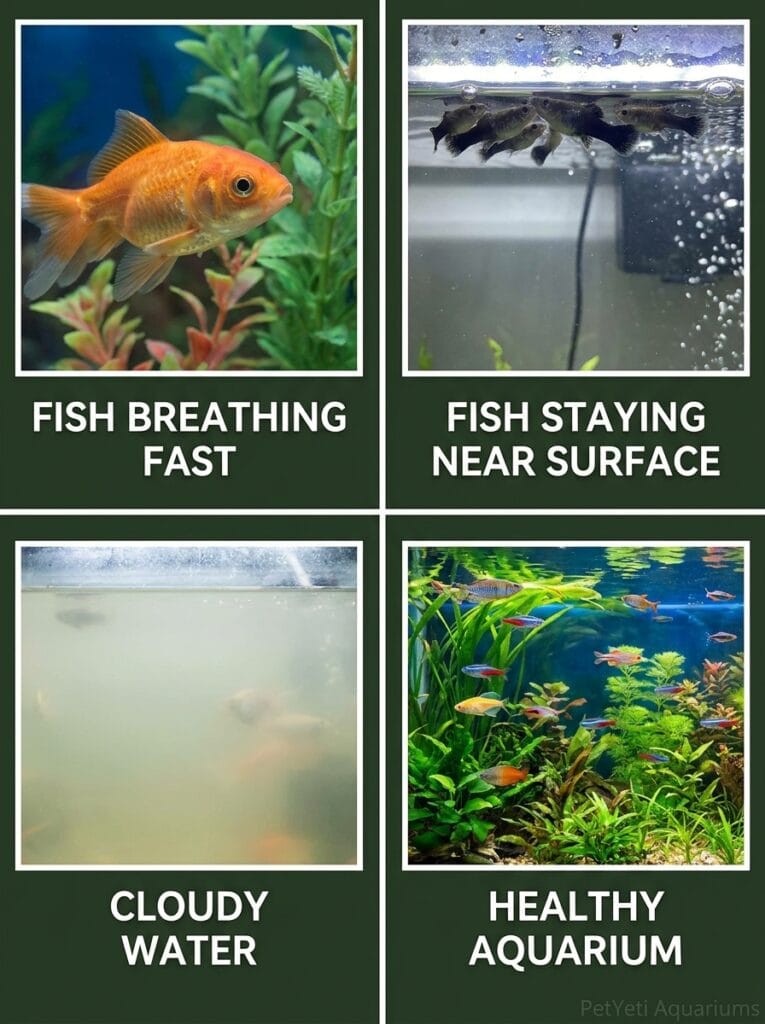
Watch for signs like:
- Fish hanging near the surface
- Faster breathing
- Cloudy water
- Increased algae growth
- Frequent filter buildup
- More fish aggression
- Fish hiding more often
If your fish begin hanging near the surface or breathing faster than usual, your aquarium could be showing early signs of stress.
Helpful next steps:
Why New Tanks Should Be Stocked Slowly
This is where many beginner problems begin.
A new aquarium may look ready for fish.
Clear water.
Running filter.
Nice decorations.
Everything looks complete.
But your biological system is still developing.
Adding too many fish too quickly can overwhelm beneficial bacteria.
That can lead to:
- Ammonia spikes
- Nitrite spikes
- Fish stress
- Sudden water problems
Think of your aquarium like a new garden.
You don’t plant an entire forest on day one.
You give it time to grow.
Real-Life Example
A beginner sets up a 20-gallon aquarium and immediately adds twelve fish because the tank looked large enough.
A week later:
- Water becomes cloudy
- Fish seem stressed
- Maintenance becomes frustrating
The issue wasn’t bad equipment.
The aquarium simply hadn’t caught up biologically.
Common Beginner Stocking Mistakes
| Mistake | What Happens |
| Buying fish based only on appearance | Adult size gets ignored |
| Adding too many fish at once | Water quality problems |
| Ignoring compatibility | Stress and aggression |
| Assuming larger filters fix everything | Bioload still matters |
| Chasing a “full” look | Crowding problems later |
Sometimes Fewer Fish Create Better Aquariums
Experienced hobbyists often think differently.
Instead of asking:
“How many fish fit?”
They ask:
“How much can this aquarium comfortably support?”
A lightly stocked aquarium often gives you:
- Easier maintenance
- Better water quality
- Healthier fish
- More natural behavior
- More room for mistakes
Ironically, fewer fish often create calmer and more beautiful aquariums.
And calmer aquariums fit the PetYeti philosophy pretty well.
Helpful Next Reads
Stocking a tank is easier when you understand tank size, cycling, and water quality first. These guides can help you avoid overcrowding and keep the aquarium more stable.
Still choosing a tank? Read our guide to choosing the right aquarium size for beginners.
New tank not fully ready yet? Start with Aquarium Cycling Explained for Beginners.
Wondering when fish can safely go in? See our guide on adding fish after setting up a tank.
Need to check water quality? Use our guide on how to test aquarium water correctly.
Want a simple testing option? See our beginner aquarium test kit guide.
CONCLUSION
There isn’t a magic number that works for every aquarium.
Tank size matters, but fish behavior, waste production, growth, and filtration matter too.
If you’re unsure, start smaller.
Give your aquarium time to mature.
Healthy fish with room to swim almost always look better than an overcrowded tank packed with activity.
FAQ
Can I fully stock my aquarium immediately?
Usually no. Adding fish slowly gives beneficial bacteria time to adjust.
Is the one-inch-per-gallon rule accurate?
Not really. It ignores fish behavior, waste production, and adult size.
Is it better to slightly understock a tank?
For beginners, yes. It usually creates a more stable aquarium.
What happens if I overstock my aquarium?
You may see cloudy water, stressed fish, aggression, and water quality problems.
Can stronger filtration allow more fish?
It helps, but it doesn’t remove stocking limits entirely.