
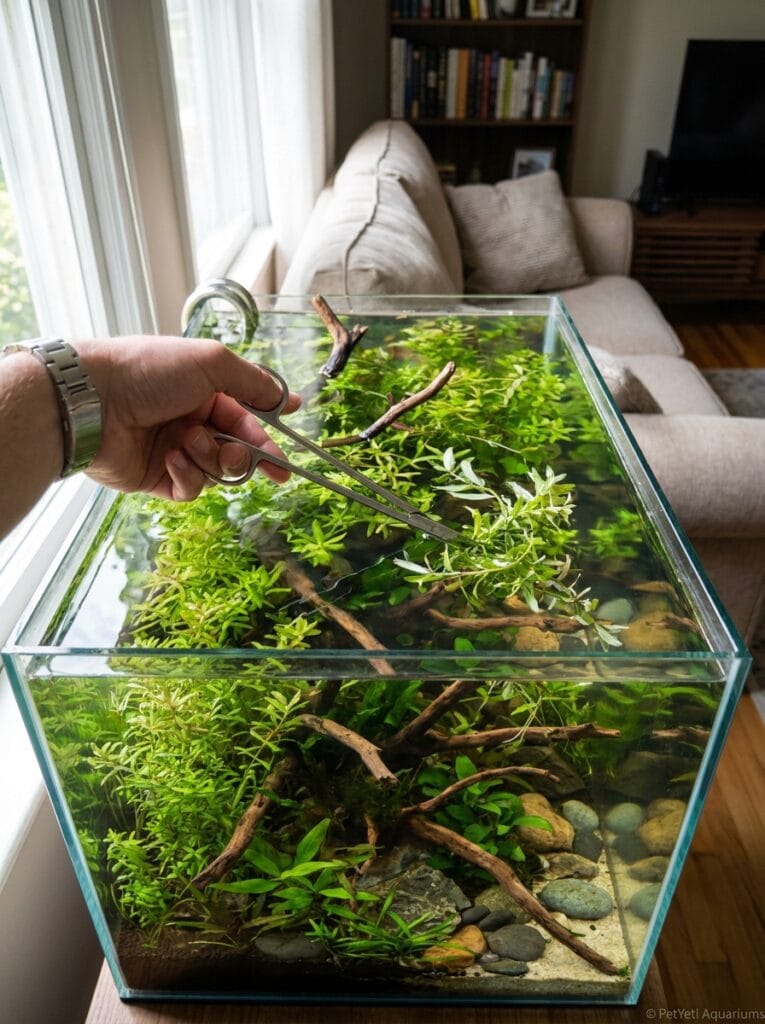
One of the best signs that your aquarium plants are doing well is that they eventually need trimming.
At first, that sounds like a good problem to have.
But many beginners quickly discover something unexpected:
They have no idea what they’re supposed to cut.
Should you trim the top?
Remove old leaves?
Cut roots?
Leave everything alone?
The good news is that trimming aquarium plants is much easier than most people think.
In fact, regular pruning often helps plants grow healthier, look better, and keep your aquarium from turning into an overgrown jungle.
In this guide, we’ll explain when aquarium plants need trimming, how to trim different types of plants, and the mistakes that beginners should avoid.
Why Trimming Aquarium Plants Is Important
Many beginners worry that trimming plants will damage them.
In reality, many aquarium plants actually benefit from regular pruning.
Proper trimming helps:
- Encourage new growth
- Improve water circulation
- Increase light penetration
- Prevent overcrowding
- Maintain the aquarium’s appearance
- Remove damaged leaves
Without occasional trimming, fast-growing plants can block light, crowd neighboring plants, and make maintenance more difficult.
Real-Life Example
A hobbyist with Water Wisteria may start with a small plant and suddenly find it covering half the aquarium a few months later. Regular trimming helps keep the aquascape balanced while encouraging fresh growth.
What to Expect
Most healthy aquarium plants become fuller and more attractive when trimmed correctly.
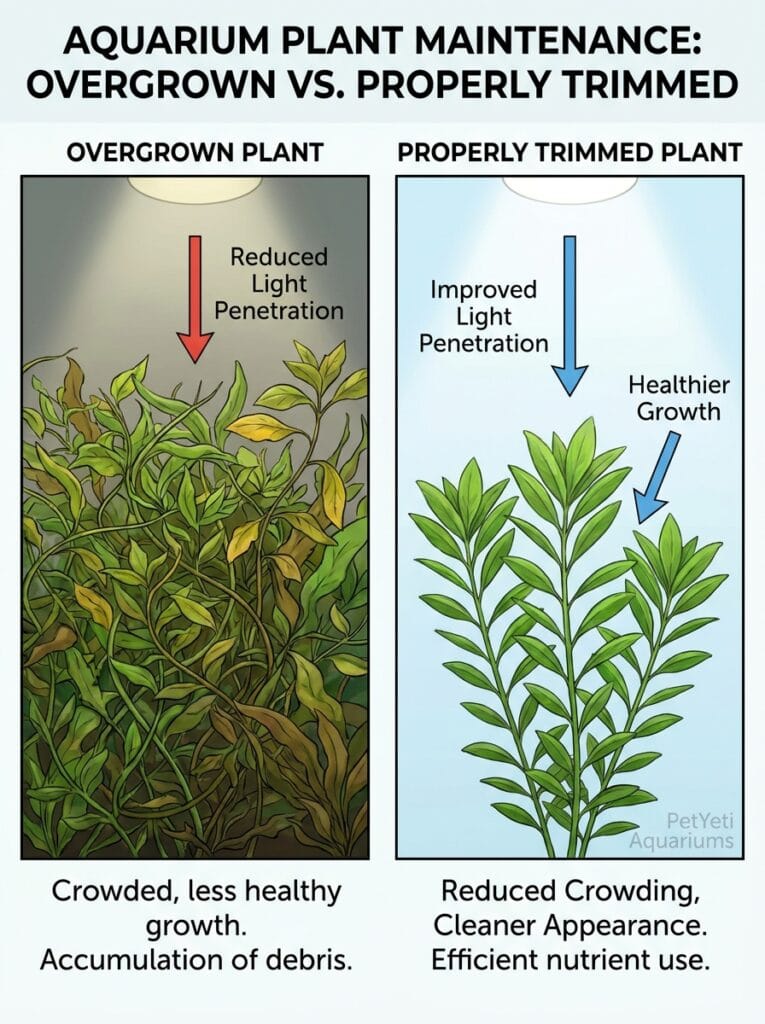
How Do You Know When Plants Need Trimming?
Plants don’t follow a schedule.
Instead, they tell you when it’s time for maintenance.
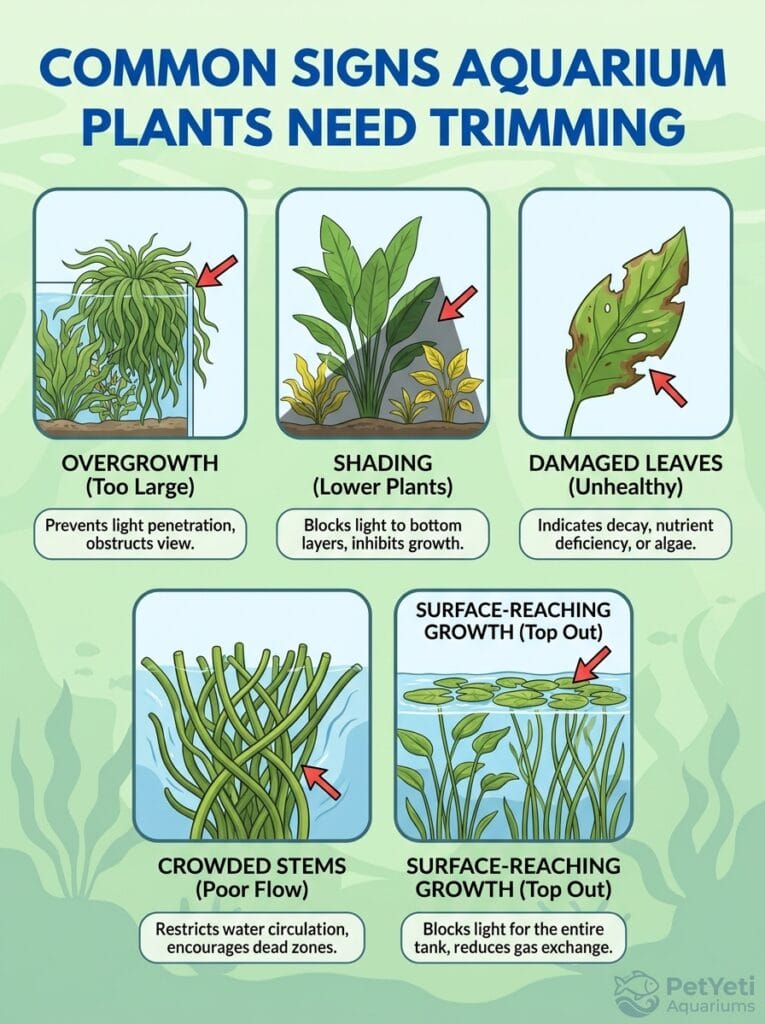
Some common signs include:
Signs It’s Time to Trim
✅ Plants reaching the water surface
✅ Leaves blocking light
✅ Overcrowded growth
✅ Dead or damaged leaves
✅ Plants shading neighboring species
✅ Excessive floating growth
Real-Life Example
Many beginners notice that their aquarium suddenly looks darker. Often, the problem isn’t the light itself—it’s that plant growth has become so dense that lower leaves are no longer receiving enough light.
PetYeti Tip
It’s usually better to trim a little at a time rather than allowing plants to become heavily overgrown.
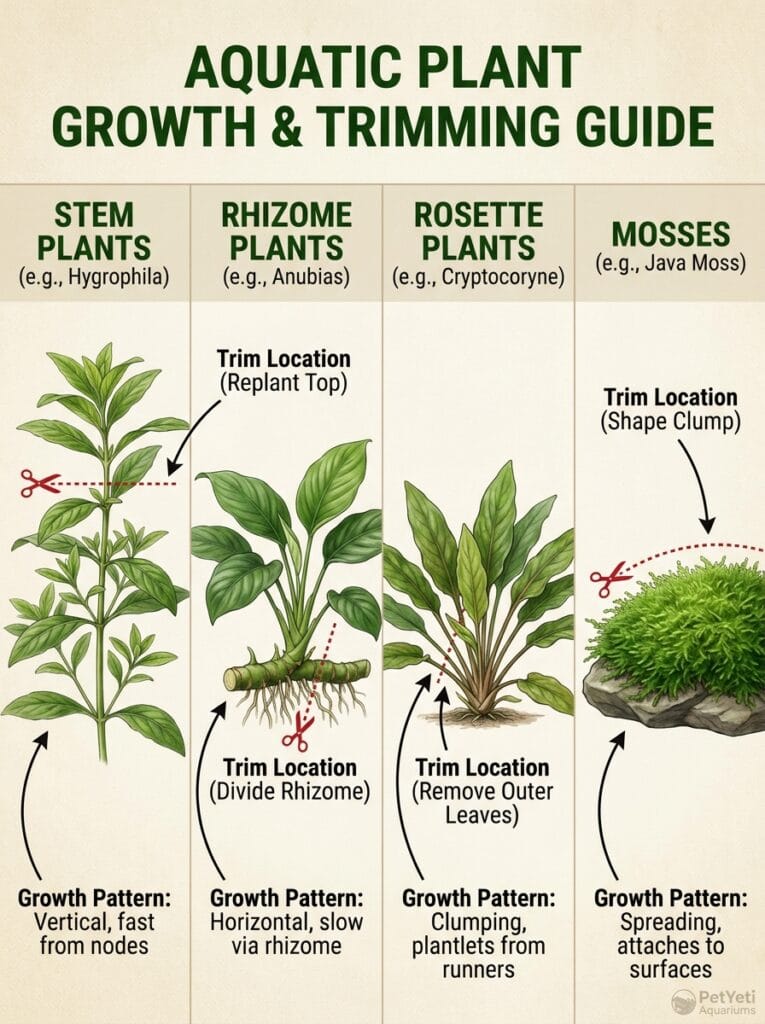
Different Plants Need Different Trimming Methods
One reason beginners become confused is that not all aquarium plants grow the same way.
The correct trimming method depends on the type of plant.
Quick Overview
| Plant Type | Example | Typical Trimming Method |
|---|---|---|
| Stem Plants | Water Wisteria, Bacopa | Trim stems |
| Rhizome Plants | Java Fern, Anubias | Remove old leaves |
| Rosette Plants | Amazon Sword, Crypts | Remove damaged leaves |
| Mosses | Java Moss | Trim excess growth |
Learning which category your plant belongs to makes pruning much easier.
Real-Life Example
Cutting the rhizome of an Anubias incorrectly can damage the plant, while trimming a stem plant encourages branching and fuller growth.
What to Remember
Always identify the plant before trimming it.
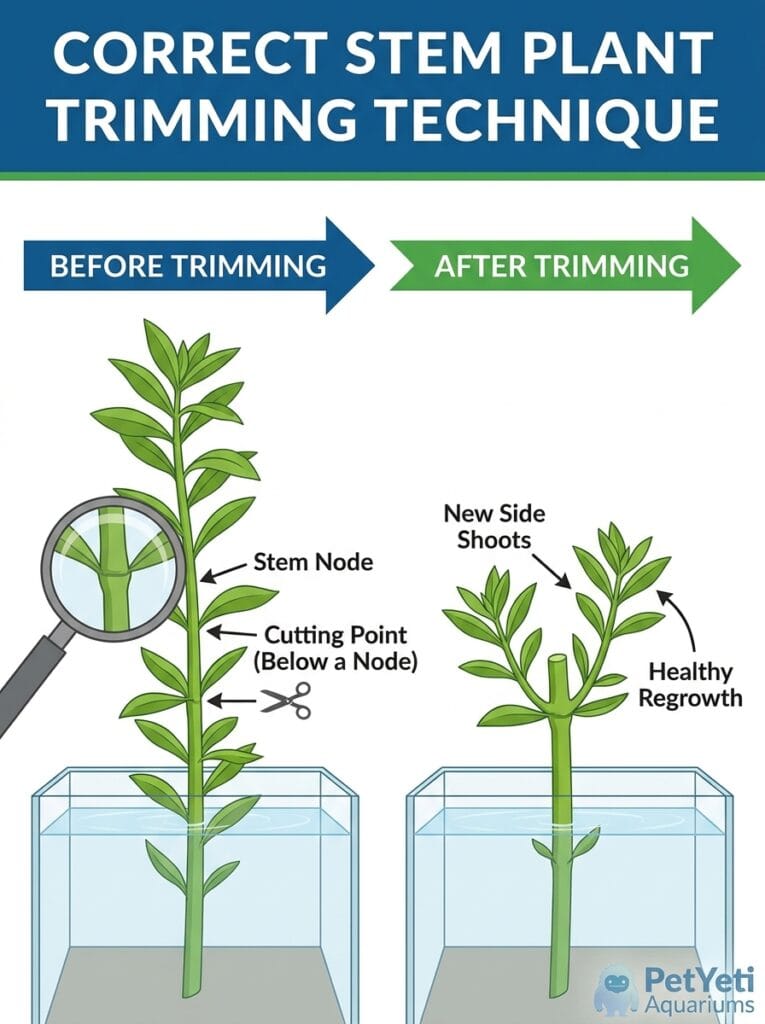
How to Trim Stem Plants Properly
Stem plants are usually the easiest plants to trim.
Examples include:
- Water Wisteria
- Bacopa
- Ludwigia
- Rotala
- Hornwort
The goal is simple:
Trim the stem above a healthy leaf node.
Once trimmed, many stem plants produce new side shoots and become bushier.
Basic Steps
- Locate a healthy stem section.
- Cut above a leaf node.
- Remove trimmed pieces.
- Replant healthy cuttings if desired.
Real-Life Example
A single stem of Rotala can eventually become a dense, attractive group after repeated trimming and replanting.
What to Expect
Most stem plants respond quickly and often look fuller after pruning.
How to Trim Java Fern and Anubias
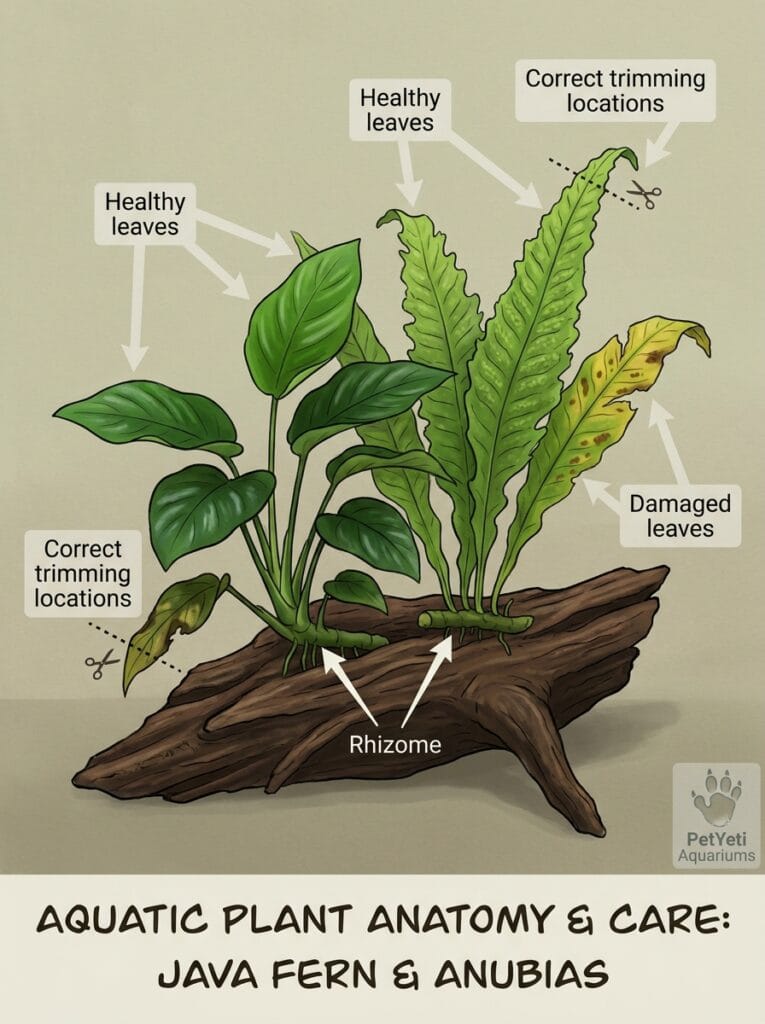
Java Fern and Anubias are among the most popular beginner aquarium plants.
Unlike stem plants, they grow from a structure called a rhizome.
Because of this, they require a different trimming approach.
What to Trim
✅ Algae-covered leaves
✅ Very old leaves
What NOT to Trim
❌ Healthy rhizomes
❌ Large sections of healthy growth
Real-Life Example
A beginner may notice a few older Java Fern leaves turning brown while new leaves continue appearing. In this situation, removing only the damaged leaves often improves the plant’s appearance without affecting healthy growth.
What to Expect
Regular removal of aging leaves helps keep rhizome plants attractive and encourages new growth.
How to Trim Amazon Swords and Cryptocorynes
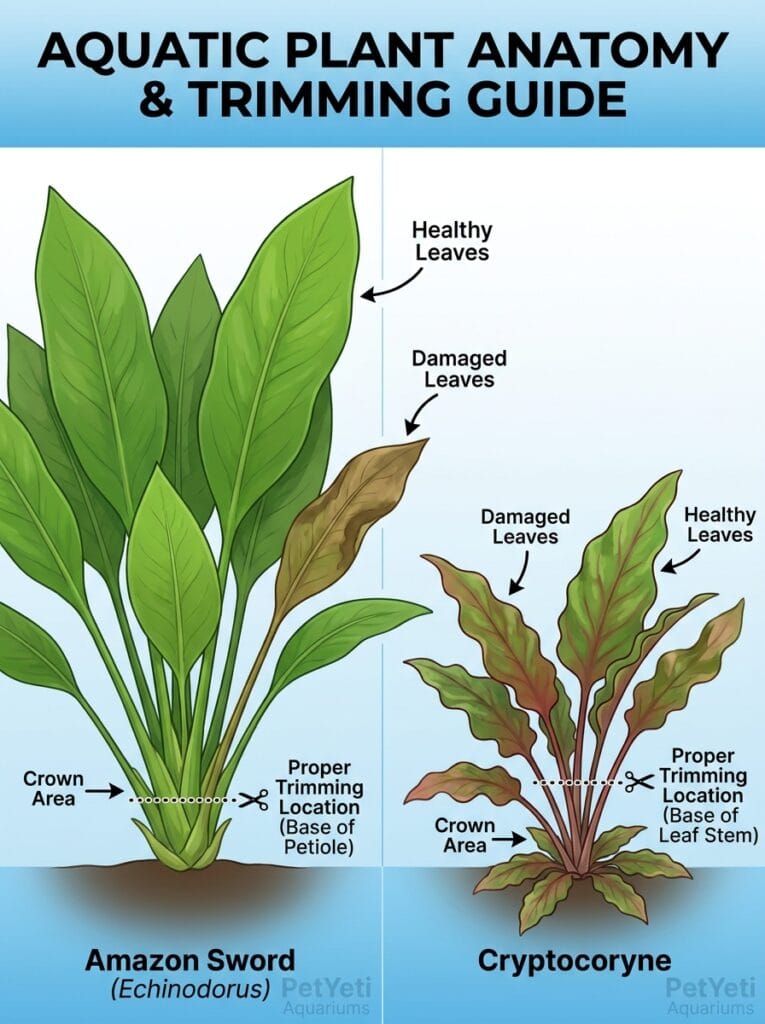
Amazon Swords and Cryptocorynes are rosette plants.
Their leaves grow outward from a central crown.
Unlike stem plants, cutting healthy leaves in half usually doesn’t improve appearance.
Instead, remove unwanted leaves at their base.
Best Practice
- Remove yellow leaves
- Remove damaged leaves
- Remove melting leaves
- Leave healthy leaves untouched
Real-Life Example
After introducing a Cryptocoryne to a new aquarium, some leaves may melt during the adjustment period. Carefully removing damaged leaves often helps the plant focus its energy on producing new growth.
PetYeti Tip
When trimming rosette plants, less is usually more.
Avoid removing large amounts of healthy foliage at once.
How to Trim Aquarium Moss Properly
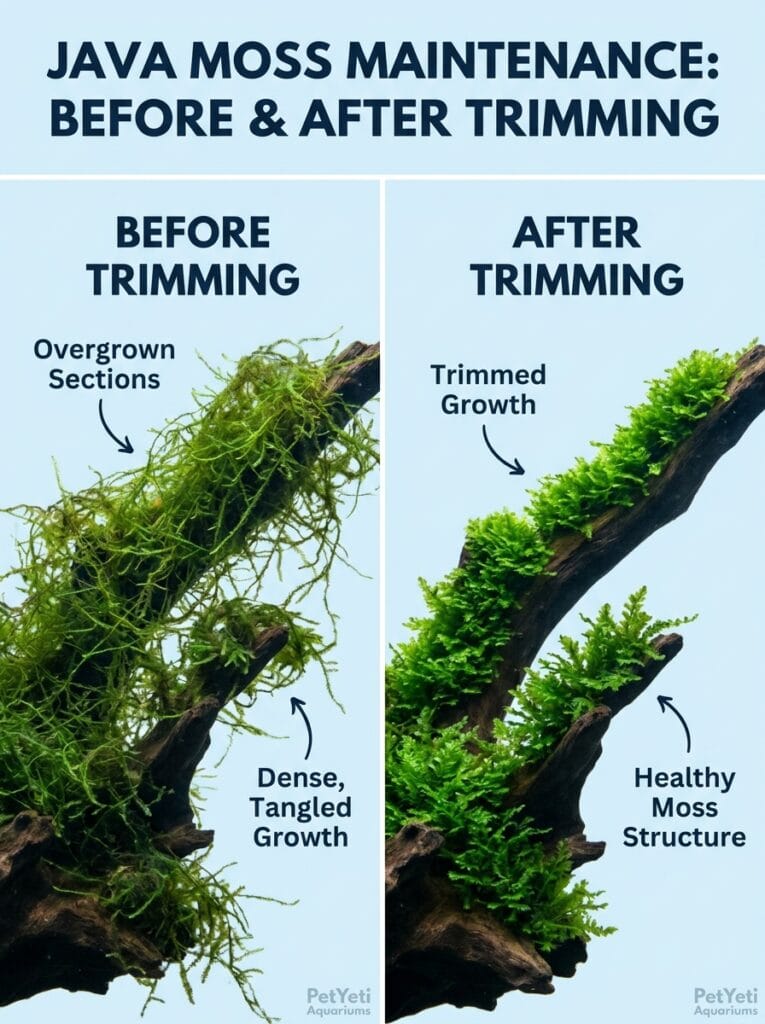
Aquarium mosses can grow surprisingly fast.
Left unattended, they may:
- Cover decorations
- Trap debris
- Restrict water flow
- Create an untidy appearance
Fortunately, trimming moss is simple.
Basic Method
- Identify overgrown areas.
- Use aquascaping scissors to trim excess growth.
- Remove loose clippings from the aquarium.
- Maintain the desired shape.
Real-Life Example
A small patch of Java Moss attached to driftwood may eventually double or triple in size. Light trimming every few weeks often keeps it looking neat and intentional.
What to Expect
Regular trimming helps moss stay compact and attractive rather than becoming a tangled mass.
Common Aquarium Plant Trimming Mistakes
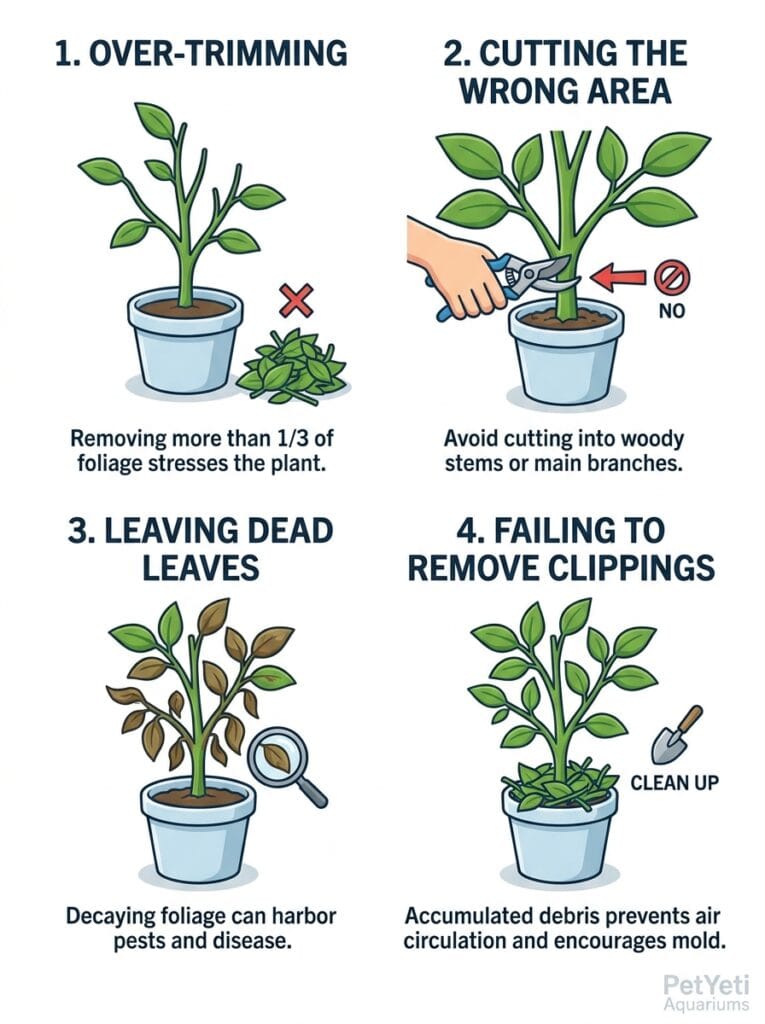
Most trimming problems happen when beginners remove too much growth too quickly.
Common Mistakes
❌ Removing more than half of a plant at once
❌ Trimming without identifying the plant type
❌ Cutting rhizomes unnecessarily
❌ Leaving plant debris in the aquarium
❌ Ignoring dying leaves
❌ Using dull scissors
Real-Life Example
A hobbyist may aggressively trim a healthy plant because it appears too large. The plant survives, but recovery takes longer than expected because excessive foliage was removed.
PetYeti Rule
Think of trimming as maintenance, not demolition.
Small, regular trims are usually better than major pruning sessions.
Best Tools for Trimming Aquarium Plants
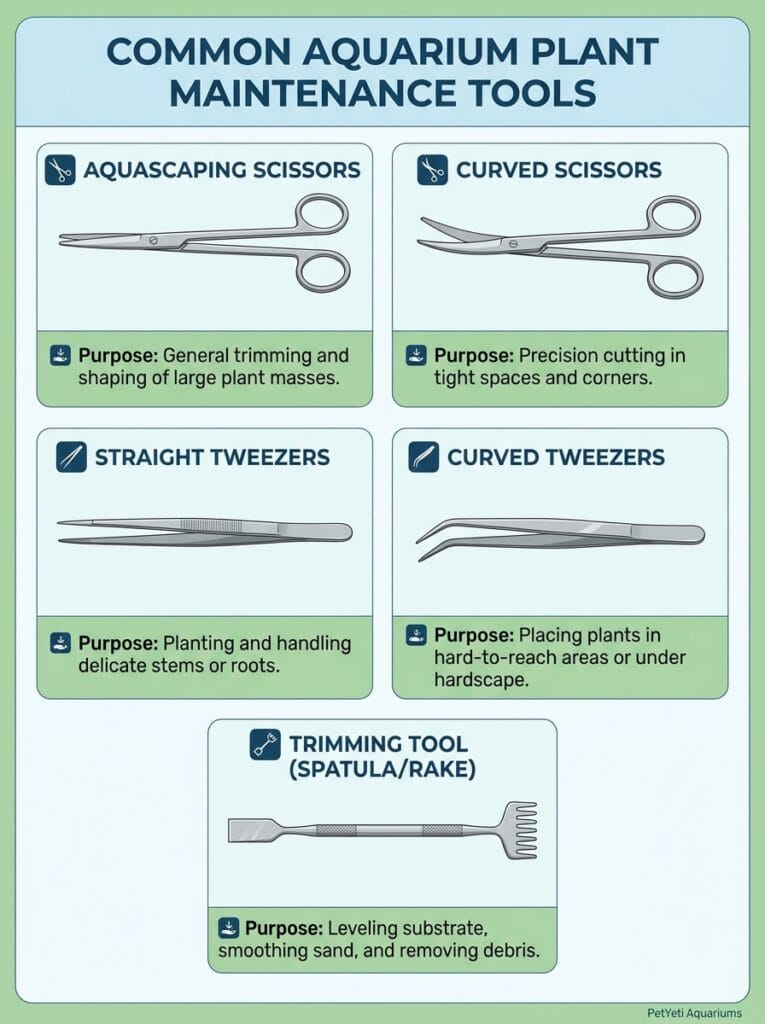
You don’t need an expensive toolkit to maintain healthy aquarium plants.
However, a few tools make the job much easier.
Useful Plant Maintenance Tools
| Tool | Purpose |
|---|---|
| Straight Aquascaping Scissors | General trimming |
| Curved Aquascaping Scissors | Carpet plant trimming |
| Tweezers | Plant placement |
| Plant Trimming Tray | Collecting cuttings |
Real-Life Example
Many hobbyists start with household scissors but eventually switch to aquascaping scissors because they provide better reach and cleaner cuts inside the aquarium.
What to Expect
The right tools won’t make plants grow faster, but they can make maintenance much easier and more enjoyable.
CONCLUSION
Trimming aquarium plants can feel intimidating the first time you do it.
Fortunately, most aquarium plants are surprisingly forgiving.
The key is understanding how your particular plants grow.
Stem plants are usually trimmed above a node.
Rhizome plants benefit from removing old leaves.
Rosette plants typically need damaged leaves removed at the base.
And mosses simply require occasional shaping.
A little regular maintenance helps plants stay healthy, keeps your aquarium looking beautiful, and prevents overgrowth from taking over the tank.
Most importantly, don’t aim for perfection.
Healthy planted aquariums evolve over time, and every trimming session helps you learn more about how your plants grow.
FAQ
How often should I trim aquarium plants?
It depends on the plant species and growth rate. Fast-growing stem plants may need trimming every few weeks, while slower-growing plants like Anubias may only need occasional maintenance.
Will trimming aquarium plants hurt them?
Usually not. Most healthy aquarium plants tolerate trimming very well and often respond by producing new growth.
Should I remove yellow leaves from aquarium plants?
Yes. Removing yellow, dying, or damaged leaves helps improve the appearance of the aquarium and allows the plant to focus energy on healthy growth.
Can I replant trimmed aquarium plant cuttings?
Many stem plants can be replanted successfully. Species like Bacopa, Rotala, Ludwigia, and Water Wisteria often grow new roots from healthy cuttings.
What happens if I never trim my aquarium plants?
Over time, plants may become overcrowded, block light, reduce water circulation, and make maintenance more difficult.
Do aquarium plants grow back after trimming?
Most aquarium plants do. In fact, many stem plants become bushier and fuller after proper pruning.